















 Consultations
 Box Finder
 Help Centre



Choosing Safe Coatings and Linings for Direct Food Contact
A functional barrier in food packaging is a coating, lining or layer designed to reduce transfer from packaging into food. You may need one when standard board is not enough for hot, greasy, moist or acidic foods, or where holding time increases migration risk.
Need food packaging solutions to get you started? Browse the range.
Browse Food Packaging Solutions
When Standard Board Is Not Enough
We’ve covered the compliance basics. You can read our blog on Advanced Barrier Solutions for Specialist Food Packaging. This guide is the next step: choosing the right food safe lining for packaging when the food itself puts more stress on the pack.
Standard board can work well for some dry, lower-risk foods. But once you add heat, grease, moisture, acidity or longer holding times, the packaging may need more help. That is where food safe coatings, barrier layers and internal linings come in.
For scaling takeaway, deli and food-to-go brands, this matters because one packaging spec often gets rolled out across multiple sites, menus and service periods. A weak spec can mean leaks, stains, softening board, migration concerns, and inconsistent customer experience.
Direct Food Contact: What We Mean Here
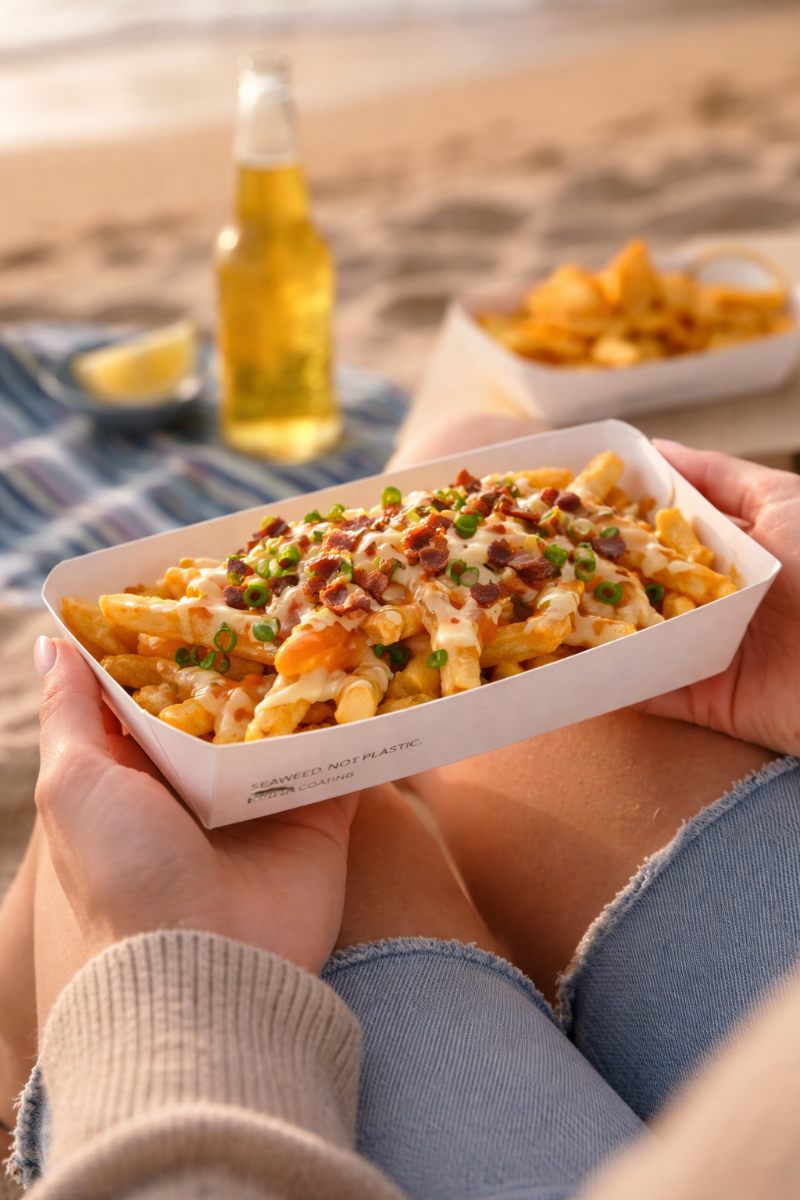
In this article, direct food contact packaging lining means the inner surface or barrier layer that the food actually touches.
We are not talking about external print finishes or general pack appearance. We are talking about the part of the box or tray that needs to hold up against the food itself.
That might be:
- The inside surface of a deli box
- A grease-resistant inner layer in a hot food carton
- A moisture barrier in a chilled food tray
- A laminated or lined structure used for more demanding foods
Uncoated Board, Coated Board, Laminated Structures and Barrier-Lined Board
These terms are often used loosely, which is where confusion starts. Here is the plain-English version.
Uncoated board:
This is board without a specialist inner barrier layer.
Best for: dry foods, short contact times, lower grease levels, simple ambient or chilled uses where supplier documentation confirms suitability.
Watch-outs: it can absorb grease and moisture more easily, soften under hot or wet foods, and may not be enough for more demanding takeaway uses.
Coated board:
This has a surface treatment or coating designed to improve performance.
Best for: cases where you need some added resistance to grease, moisture or handling wear.
Watch-outs: not all coatings do the same job. A board sold as grease-resistant may not offer the same barrier performance as a more specialist lining.
Laminated structures:
These use an added layer or film structure to create stronger protection.
Best for: more challenging applications where stronger separation between food and board is needed.
Watch-outs: cost, recyclability expectations, and the need to confirm exact use conditions.
Barrier-lined board:
This uses an internal lining or functional barrier designed for higher-performance food contact use.
Best for: hot, greasy, moist or acidic foods, or where food sits in the pack for longer.
Watch-outs: specify the real use case clearly. “Lined” is not enough detail on its own.
What Is a Functional Barrier in Food Packaging?
A functional barrier in food packaging is a layer that helps limit the movement of substances between the packaging and the food.
In practice, it is there to reduce migration risk and improve performance when food is more demanding than standard dry use.
That does not mean every takeaway box needs a heavy-duty lining. It means the barrier level should match the menu and service conditions.
What Increases Migration Risk?
The key issue is not just whether a pack is labelled for food contact. It is whether it is suitable for your exact conditions of use.
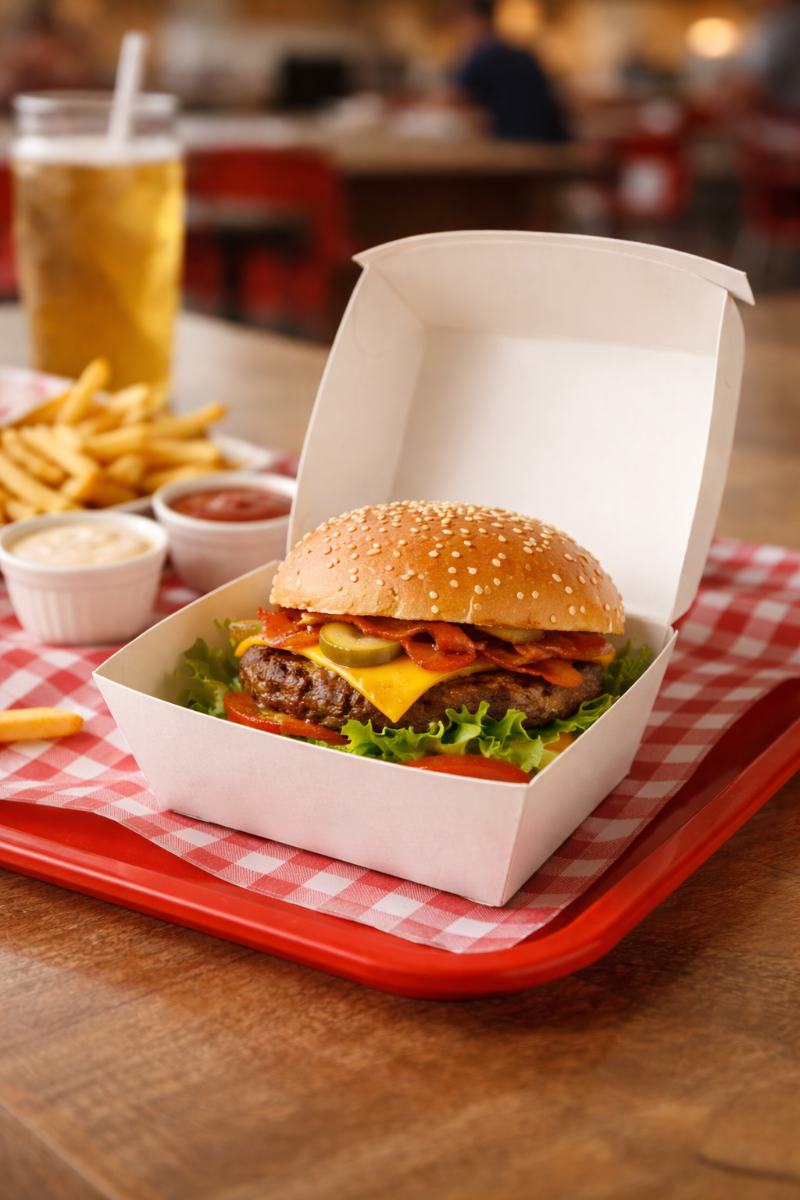
Heat: Higher temperatures can increase the chance of migration in food packaging coatings and can also affect how well a coating performs during service.
Fat and grease: Oily foods can stress packaging much more than dry foods. A pack that looks fine for bakery use may not be suitable for a hot, oily noodle dish or a buttery deli item.
Moisture: Condensation, steam and sauces can soften board or challenge a weak barrier. Moisture resistance matters as much as grease resistance in many food-to-go formats.
Acidity: Acidic ingredients such as dressings, vinegars, pickles and some sauces can create a more demanding contact environment.
Time: The longer food sits in the pack, the more important suitability becomes. A short takeaway handover is different from a held hot meal, a chilled deli display, or a delivery window.
Grease Resistance, Moisture Resistance and Full Barrier: Not the Same Thing
These phrases are often treated as interchangeable. They are not.
Grease resistance:
A grease resistant food packaging lining is designed to slow or prevent fats and oils from soaking through the board.
Moisture resistance:
This helps the pack cope with wet foods, steam, condensation or chilled conditions without softening too quickly.
Full or higher-level barrier:
This is used where stronger separation is needed because the food is more demanding, the hold time is longer, or the conditions create higher migration or performance risk.
A pack can be grease-resistant without being the best choice for hot, wet foods. Likewise, a moisture-resistant surface may not be enough for oily foods. Always check what the barrier is actually designed to do.
Water-Based Coatings vs Polymer Linings
This is one area where operators often want a simple answer. The honest one is: it depends on the job.
Water-based food safe coating:
A water based food safe coating can be a strong option where you want functional performance with a more straightforward material story. These coatings may be suitable for some food-contact uses, but performance depends on the actual product and intended conditions.
Polymer or lined structures:
These can offer stronger barrier performance for more demanding foods and service conditions.
The practical takeaway:
Do not buy on material buzzwords alone. Buy on:
- Food type
- Service temperature
- Hold time
- Whether grease, moisture or acidity is present
- Supplier evidence for that exact use
A Careful Note on PFAS-Free Coatings
PFAS free food packaging coating is a growing search area, and understandably so. Operators want clarity without drama.
The sensible approach is:
- Ask suppliers what barrier chemistry is being used
- Ask whether PFAS-free options are available for your application
- Confirm that any claims are backed by product documentation
- Avoid assumptions based on marketing phrases alone
The key point is not to panic or speculate. It is to specify clearly and ask for evidence that matches your menu and compliance needs.
Inks and Adhesives Matter Too
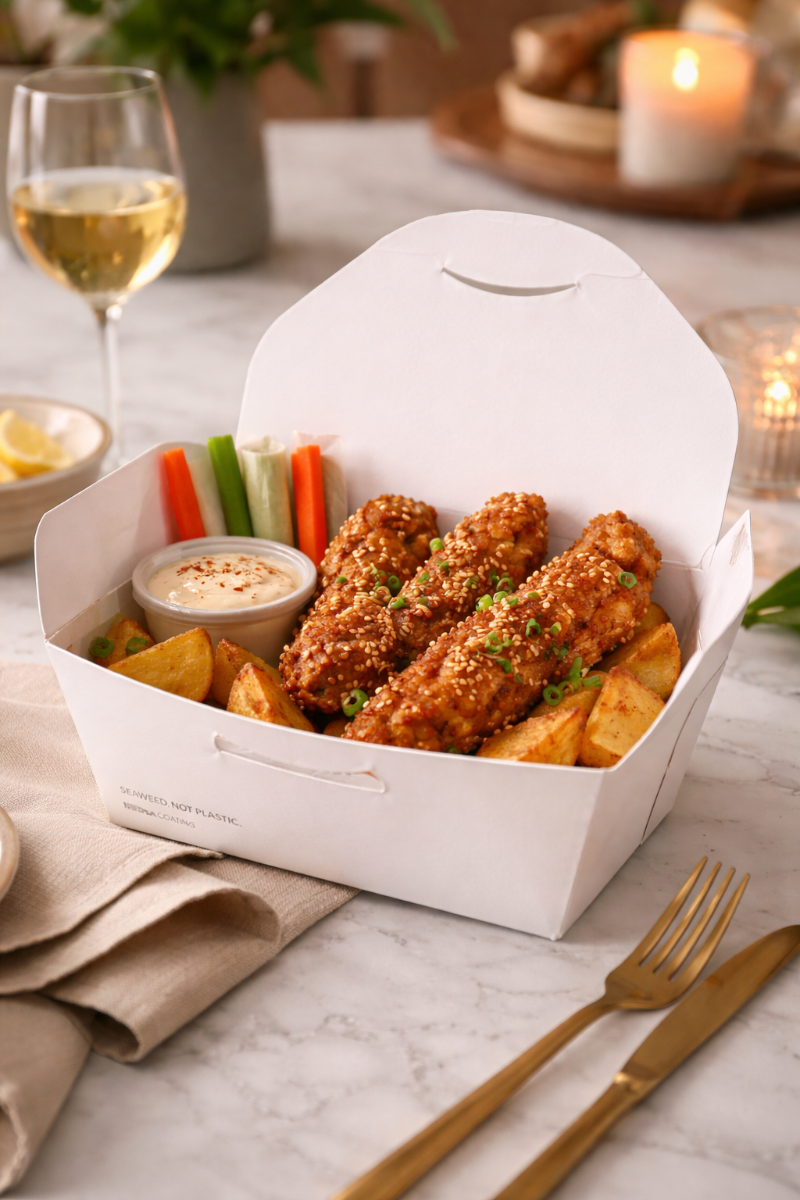
When thinking about coatings and linings, it is easy to focus only on the board. But inks and adhesives must also be suitable for food-contact use where relevant.
This matters especially if:
- The structure includes food-facing printed areas
- Adhesives form part of the internal construction
- There is any chance of transfer through the material or from poorly controlled design or use
If the coating or lining forms part of the food-contact performance, your supplier documentation should reflect the whole construction, not just one layer in isolation.
What to Confirm in a Declaration of Compliance
A Declaration of Compliance for a coated or lined pack should not just say “food safe” and leave it there.
For specification-level buying, ask whether it covers:
- The coating or lining itself
- Any relevant adhesives
- Intended food types
- Temperature limits or hot-hold conditions
- Contact time assumptions
- Any restrictions on reheating or extended use
- Any conditions that would require a different spec
This is where multi-site operators can save time later. A clearer spec up front means fewer site-by-site questions and fewer inconsistent workarounds.
How to Test Suitability Against Real-World Use
The fastest way to make a good packaging spec go wrong is to assess it in theory only.
Ask questions based on real service conditions:
- How hot is the food when packed?
- How long does it sit in the box?
- Is it greasy, saucy, acidic or wet?
- Will boxes be stacked?
- Will steam or condensation build up?
- Could customers reheat in the pack?
Check performance practically:
Before rolling a spec out across sites, test it for:
- Grease strike-through
- Softening or distortion
- Leaks at folds or seams
- Surface failure during holding time
- Condensation effects in chilled or delivery conditions
A coating that looks fine after 5 minutes may not look fine after 25.
Cost vs Risk: How to Make a Sensible Choice
It is tempting to reduce cost by stepping down to a simpler board. Sometimes that works. Sometimes it creates a false economy.
Under-spec and you risk:
- Food-contact suitability concerns
- Leaks or stains
- Pack failure in service
- Customer complaints
- Site inconsistency
- Reputational damage
Over-spec and you risk:
- Overspending unnecessarily
- Using more complex materials than the menu really needs
- Making standardisation harder across the range
The right answer is not “always choose the heaviest barrier”. The right answer is to specify the lowest-complexity solution that is proven suitable for the real food and hold conditions.
Storage and Handling Still Matter
Even the right coating can underperform if the packs are not handled properly.
Good practice:
- Keep packs dry and clean
- Store away from contamination and damp
- Rotate stock properly
- Avoid crushing or damaging lined surfaces before use
- Brief teams not to substitute similar-looking packaging across menu items
A multi-site packaging standard is only as good as the way it is used on the ground.
| Food condition | Likely packaging need | What to confirm with supplier |
|---|---|---|
| Cold + dry | Standard or lower-barrier board may be suitable | Suitability for direct food contact and intended hold time |
| Cold + moist | Moisture resistance may be needed | Condensation performance and hold time |
| Hot + low grease | Coated board may be suitable | Hot-hold conditions and structural performance |
| Hot + greasy | Stronger barrier or lining likely needed | Grease resistance, migration suitability, hold time |
| Acidic + wet | More careful lining choice may be needed | Suitability for acidic foods and contact duration |
| Long hold or reheating risk | Higher-spec barrier may be required | Explicit use conditions and restrictions |
This is a guide, not a shortcut around supplier evidence. The point is to help you ask sharper questions, faster.
Your Specification Checklist
Before approving a coated or lined food pack, check that you have:
- Defined the food type clearly
- Confirmed serving temperature and hold time
- Identified whether grease, moisture or acidity is involved
- Asked what barrier or lining is being used
- Confirmed whether PFAS-free options are available if relevant to your policy
- Reviewed the Declaration of Compliance for the full construction where needed
- Tested the pack under real service conditions
- Documented the approved spec for all sites
Need food packaging solutions to get you started? Browse the range.
Browse Food Packaging Solutions
FAQs
What is a functional barrier in food packaging, and when is it needed?
It is a layer that helps reduce transfer between packaging and food. You may need one when standard board is not enough for hot, greasy, moist, acidic or longer-held foods.
Do all takeaway boxes need an internal lining?
No. Some foods can work well in standard compliant board formats. Linings become more important when heat, grease, moisture, acidity or hold time increase the demand on the pack.
Is grease-resistant board automatically safe for direct food contact?
Not automatically for every use. Grease resistance is only one part of the picture. You still need to confirm suitability for the actual food, temperature and contact time.
How do heat and fat affect migration in packaging coatings?
Both can increase the stress on coatings and can raise migration risk, which is why hot, oily foods usually need closer specification checks.
Are water-based coatings food safe?
They can be, depending on the product and intended use. Always confirm the specific coating is suitable for your food and service conditions.
What should a Declaration of Compliance say about coatings and adhesives?
It should help confirm suitability for the full food-contact construction, including use conditions such as food type, temperature, time and any restrictions.
Are PFAS-free coatings available for food packaging?
They may be, depending on the packaging format and performance requirement. Ask suppliers what options are available and request supporting documentation.
How can I test whether a packaging lining is suitable for my menu?
Test it under real service conditions: actual food, actual temperature, actual hold time, stacking and transport conditions where relevant.