






 Consultations
 Box Finder
 Help Centre


Who is this guide for
This guide is for retail, packaging, and operations professionals who need letterbox postal boxes that reliably pass Royal Mail’s Large Letter slot in real life, not just in a spreadsheet. Expect proven footprints (dimensions), quick fit-checks, and easy product-to-box mapping.
Need options now?
What “really fit” means (and why boxes miss)
A box really fits when it slides through a 25mm Large Letter slot gauge with 2–3mm of breathing room. That extra space absorbs tape thickness, small crushes in transit, and the occasional enthusiastic packing.
Boxes fail the slot test when:
- Internal vs external dimensions get mixed up.
- Tape or lid seams quietly add 1-2mm.
- Void fillers cause bulging.
- Crush-up in transit isn’t accounted for.
If you're new to Royal Mail bands, make sure to avoid oversize charges with our guide:
Avoid oversize charges with smart picks blog
Proven letterbox-friendly footprints
These popular PIP box (A4/A5/A6) style dimensions are the most dependable for staying under the 25mm external height cap. Aim for 18-22mm internal height for the best pass rate
| Footprint (internal target) | Typical internal L x W x H (mm) | Common uses |
|---|---|---|
| PIP A6 Slim | ~160 × 115 × 18-20 | Jewellery sets, slim candles/tins, accessories, small electronics spares |
| PIP DVD / Trade A5-narrow | ~190 × 135 × 18-20 | Journals, small frames, stationery packs, socks |
| PIP A5 Slim | ~215 × 155 × 18-20 | Tees folded flat (S-M), beauty sets, cards + extras |
| PIP A5 Max LL | ~215 × 155 × 21-22 | Chunkier tees, lightweight knitwear, small gift sets needing a pad |
| PIP A4 Slim | ~305 × 215 × 18-20 | Notebooks, L-XL knitwear/tees, prints with pads |
| PIP A4 Max LL | ~305 x 215 x 21-22 | Larger format books/folios needing crush room |
Guardrail: External footprints must stay under 353 × 250 mm for Large Letter. These A4/A5/A6 internals typically stay under once board thickness is accounted for.
Product → box mapping (reliable matches)
Use these as a starting point. Always run a fit-check because every product is shaped slightly differently (and some behave unpredictably… like candles).
- Beauty sets (1–3 items, no glass pumps): PIP A5 Slim + 1 mm corrugate pad top and bottom + tissue wrap.
- Candles (travel-size, shallow tins ≤ 20 mm): PIP A6 Slim + paper nest + thin top pad. Avoid loose fill.
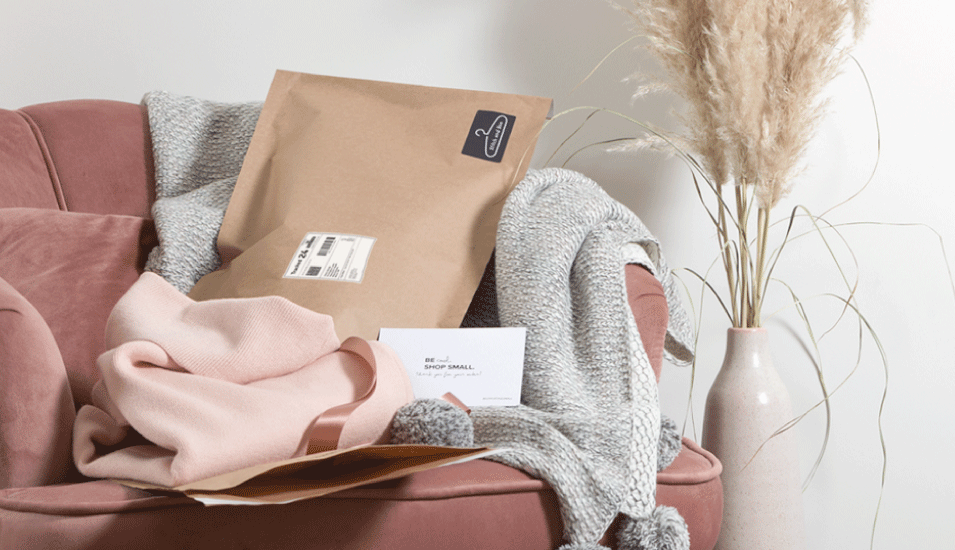
- T-shirts and knitwear (1 item): S-M: PIP A5 Slim, L-XL: PIP A4 Slim, add a thin belly band to keep items flat.
- Books and notebooks: Paperbacks → PIP DVD, A4 notebooks → PIP A4 Slim with a 1 mm pad.
- Stationery sets (cards, envelopes, etc.): PIP A5 Slim with corner pads; keep stacks ≤ 20–22 mm.
The 60-second fit-check
A quick step-by-step process for your packing bench:
- Wrap your products once in tissue or paper.
- Add 1-2 mm corrugate pad top and bottom if needed.
- Close and tape the box as you would for your customers (no gentle “photo-close”).
- Slide through a 25 mm slot gauge.
- If it sticks or needs force, reduce the pad or change the footprint.
- Record the passing external size, product, and final weight.
Headroom rule: Aim for 3-5 mm of clearance to survive small crushes and variations in tape thickness.
Protection that still passes
(All-paper combinations that stay under 25 mm)
- Under and over pads: 1mm E-flute adds rigidity with barely any height. Opt for two thin pads over one bulky one.
- Edge protection: Slim card U-channels on long edges for fragile items.
- Wrap choice: Tissue + kraft belly band keeps items from shifting and prevents lid bulge.
- Avoid loose fill: It migrates, lifts the lid and ruins letterbox size compliance. (Gravity: undefeated.)
When to step up a band
(Small Parcel often saves money overall, rather than multiple returns)
Use Small Parcel when:
- Packed height exceeds 23-24 mm before tape.
- Weight exceeds 750g.
- Your product is fragile, or stacked and needs corner risers or dividers.
- Large Letter crush-damage returns cost more than the postage savings.
Better a safe parcel than a sad customer email.
Top tips that lift pass rates
(And make your team’s day run smoother)
- Pre-kit bestsellers: Build a day’s worth of A5/A6 kits; pads + pre-cut tape included.
- Colour-code your shelves: A6 = green, DVD = blue, A5 = orange, A4 = purple.
- Sample before palletising: Order a sample kit and test with live SKUs.
- Label flat: Keep barcodes on one face, no wraparounds that jam scanners.
Sustainability note
Right-sized letterbox postal boxes reduce void fill, cut emissions, and deliver a tidier unboxing experience. Stick to all-paper wraps and pads for easy kerbside recycling, and encourage your customers to reuse the boxes first.