










 Consultations
 Box Finder
 Help Centre


Who is this guide for
This guide is for owner-managers and ops-minded buyers at UK independents and SMEs (jewellers, candle and beauty makers, boutique fashion brands, and corporate gifters) who want to lower the landed cost per luxury gift bag without compromising brand feel.
The promise: lever-by-lever savings you can apply this quarter. No greenwash, just smart swaps.
What is “landed cost” for gift bags?
Landed cost is the true cost of each usable bag that reaches your shelves, not just the unit price on the quote.
Landed cost per unit = (Bag unit price + Print & finishes + Freight + Duties & surcharges + Wastage + Storage/handling) ÷ Good units received
Bag unit price: Base cost driven by material (kraft vs coated), GSM, size, and handle type.
Print & finishes: Colour count, coatings, foil, emboss/deboss, and lamination.
Freight: Inbound to the UK (sea vs air), last-mile delivery, and fuel surcharges.
Duties & surcharges: Import duty, courier or broker fees, and INCO term effects.
Wastage: Scuffs, colour variances, damaged bags, and mispicks.
Storage & handling: Pallet space, pick/pack, re-boxing, and returns.
Where SMEs typically overspend
- Over-spec GSM and plastic lamination that don’t add perceived value.
- Flood prints and oversized foil areas where a neat one-colour or sticker would do.
- Air freight used to catch up on missed approvals.
- Fragmented SKUs (near-identical sizes or colours) that miss price breaks.
- Reprints caused by avoidable colour or finish sign-off issues.
Materials & formats that save without downgrading the look
Optimise GSM: Moving from 250gsm to 210–230gsm on luxury paper gift bags often retains stiffness while trimming cost and weight. Pair with a quality matt aqueous coating for a premium, plastic-free feel.
Skip plastic lamination: If you don’t need wipe-clean shine, choose unlaminated or matt aqueous coatings. They improve recyclability and reduce both unit cost and freight weight.
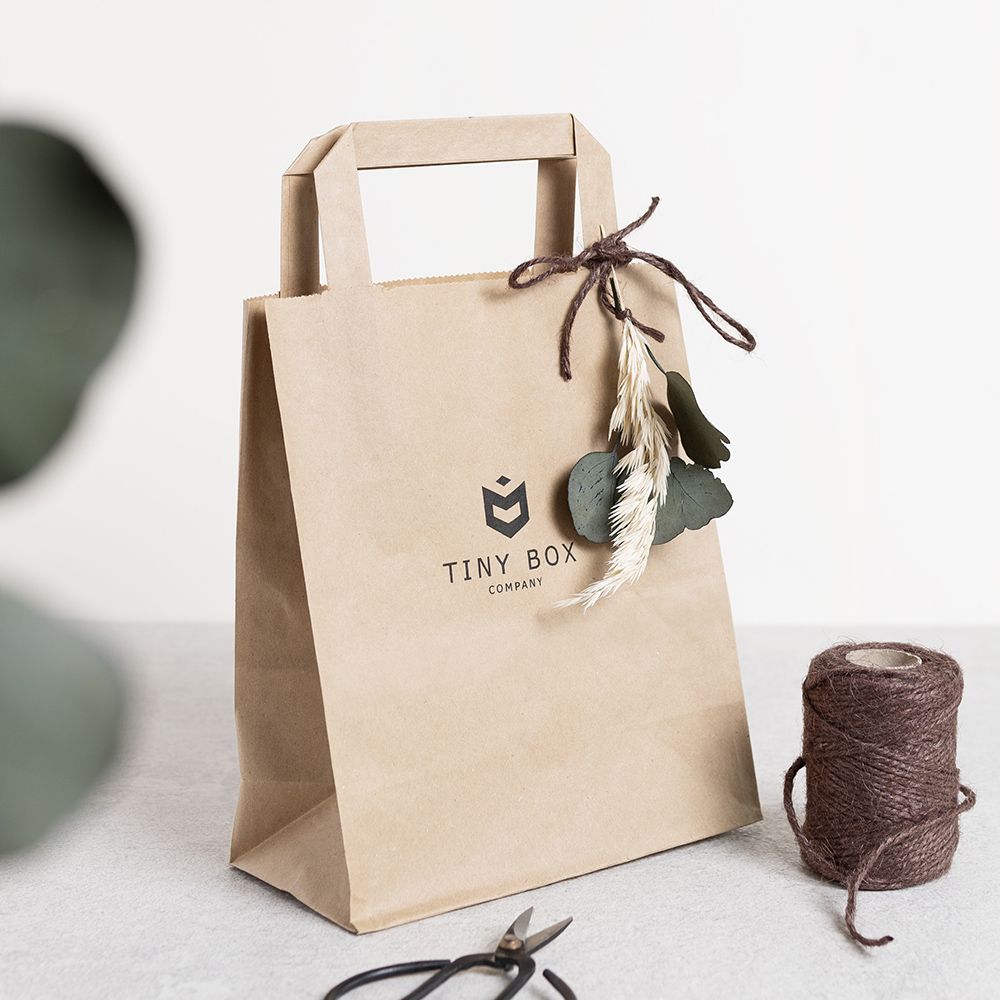
Choose the right substrate: Recycled kraft (FSC-certified options available) prints beautifully with a single dark brand colour and delivers a luxury-natural look.
Standard sizes, die lines & handle choices
Standardise sizes: Align SKUs to held-stock die lines (typical jewellery, candle, apparel, and bottle sizes) to reduce tooling and hit better MOQs.
Flat-packed vs rigid: Flat-packed bags lower freight volume and storage costs compared to rigid formats.
Handle swaps: Paper twist or rope instead of cotton or ribbon where fit for purpose, especially effective on small luxury gift bags.
Style note: Keep ribbon handles for hero SKUs. Make luxury a tiered experience, not the default.
Print & finish trade-offs
One colour over two: A single brand colour on kraft or coated stock reads premium and saves ink time and setup.
Ditch flood coats: Full coverage prints use more ink and increase reject risk. Negative space works harder.
Constrain foil: Keep foil to logos or slim accents to cut block costs and improve recyclability messaging.
Aqueous vs plastic lamination: Matt aqueous gives a soft-touch feel without plastic.
Semi-custom routes (fast, flexible, lower risk)
Stock + sticker: Start with luxury gift bags wholesale UK in neutral colours (black, white, kraft) and add a foil sticker or paper band for seasonal campaigns.
Be sure to sample gift bags before you commit
Read: Sampling gift bags before you commit
Branded ribbon: Let ribbon do the branding. Swap colours seasonally without reprinting bags.
MOQ & supplier levers
Hit the break: Unit cost often drops sharply at 1,000 → 2,000 → 5,000 units. Consolidate near-duplicate sizes to cross thresholds.
Share SKUs: One neutral colour (black, white, kraft) can serve jewellery, candles, and apparel.
Evergreen colours: Fewer seasonal shades mean less dead stock and simpler reorders.
UK vs offshore manufacture
UK manufacture: Higher unit cost but lower freight and duty exposure, faster lead times, and easier top-ups.
Offshore manufacture: Lower unit price, but factor in freight, duty, and longer timelines. Best when approvals and volumes are predictable.
Tip: Prove the spec with UK held stock, then move hero SKUs offshore once demand is steady.
Freight, duties & admin
Consolidate cartons: Fewer, fuller cartons reduce per-unit freight and damage risk.
Know your INCO terms: Understand whether prices include freight and insurance to a UK port.
Commodity codes: Paper bags usually fall under Chapter 48. Confirm with your broker to avoid overpaying duty.
Avoiding air freight & reducing damage
Avoid air: Air freight can add £0.15–£0.30+ per unit. Faster approvals and buffer stock protect timelines.
Pack smart: Base boards and interleaves reduce scuffs. Specify maximum carton weights for safe handling.
Wastage reduction (quality that saves)
Colour discipline: Approve physical swatches or calibrated proofs before mass print.
First-run QC: Inspect the first 100–200 units for colour, handle knotting, glue, and board alignment.
Damage prevention: Base boards on large bags to prevent corner crush; protective packing reduces rub marks.
Storage, pick & reorder cadence
Right-size storage: Flat-packed bags can double units per pallet compared to rigid formats.
Pick/pack: Batch picks by size and colour to reduce handling costs.
Reorder trigger:
Average weekly usage × Lead time (weeks) + Safety stock
Example: 250 units/week × 8 weeks + 500 safety = 2,500 units
Quick savings calculators (per 1,000 units)
Remove a flood coat: ~£40–£80 saved.
Reduce colour count: ~£20–£50 saved.
Limit foil area: ~£30–£70 saved.
Handle swap (ribbon → paper twist): ~£60–£100 saved.
GSM optimisation: ~£20–£40 saved plus freight reduction.
Avoid air freight: £150–£300+ saved.
Buyer’s checklist: brief suppliers properly
- Target GSM range, substrate, and aqueous coating preference.
- Flat-packed confirmation, handle type, and base boards where needed.
- Colour count capped at one; foil restricted to logos.
- Physical colour approval and first-run QC process.
- Clear quote breaks, INCO terms, lead times, and carton dimensions.
- Recycled content %, FSC options, and mono-material preference.
When to choose stock, semi-custom, or full custom
Stock: Fastest route for low MOQs, use neutral bags plus stickers or ribbon.
Semi-custom: Best balance of cost, speed, and brand control.
Remember
Luxury look, lower cost. Simplify finishes, choose smarter materials, hit the right MOQs, avoid air freight, and reduce wastage with disciplined approvals.
That’s how UK SMEs protect margin, without losing the magic of unboxing.
Full custom: Ideal for hero SKUs with steady volumes.
Need gift bags to get you started?