






 Consultations
 Box Finder
 Help Centre


Keep Boxes Square at Jewellery Scale
Small boxes show everything.
A large gift box can hide the odd fraction of movement. A small jewellery box usually cannot. At jewellery scale, tiny shifts in board, wrap, lid fit, corner turn-ins, or hinge tension can make the whole pack look out of square. That is when you start to see lid rock, uneven reveals, soft corners, poor stacking, and boxes that feel less premium than they looked in the sample photo.
For high-volume retail and fulfilment teams, this matters. A jewellery box is not only there to protect the product. It also needs to present cleanly, stack neatly, pack quickly, and arrive looking sharp. When small-format packaging varies across a run, it creates extra checks, more rejects, slower packing, and a less consistent customer experience.
Here is what to look for when choosing and checking jewellery boxes, especially rigid formats, gift boxes with lids, and other small premium packs.
Need jewellery gift boxes to get you started?
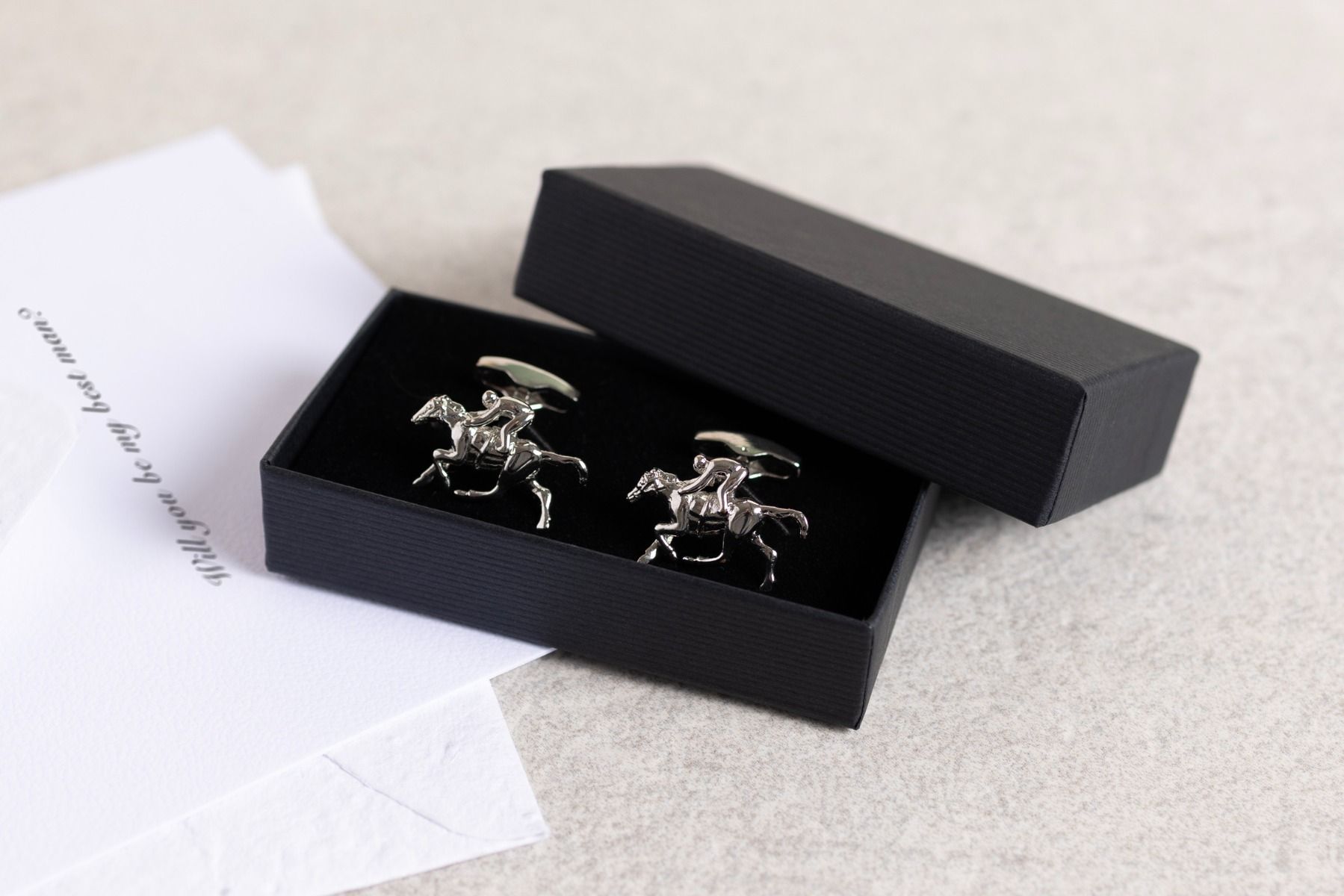
Why Small Jewellery Boxes Go Out of Square
A small jewellery box has tighter visual tolerances than a larger box. That sounds technical, but the idea is simple: the smaller the box, the easier it is to spot a small error.
On a large box, a 1mm shift in the lid may be easy to miss. On a tiny gift box, that same 1mm shift can make one side look heavy, one corner look twisted, or the lid look as though it does not belong to the base.
Common causes include:
- board panels cut slightly out of line
- wrap tension pulling one corner more than another
- turn-ins that create uneven thickness inside the box
- lid and base tolerances that are too loose or too tight
- hinge tension pulling the lid backwards or sideways
- stacking pressure revealing a base that is not flat
This is why small boxes are not always simpler to get right. There is less material, yes, but there is also less room for error. At jewellery scale, neatness has nowhere to hide.
Corner Wraps Matter More on Tiny Boxes
Corners are one of the first places customers notice quality. A square rigid gift box should have clean, sharp corners with no obvious drift, bunching, lifting, or soft folds.
On small jewellery boxes, corner wraps are especially important because the wrap has to turn neatly around a much tighter area. If the wrap is pulled too hard, the box can twist. If it is too loose, the corner can look soft or raised. If the turn-in is uneven, the lid or base may sit slightly out of line.
When checking corner quality, look for:
- four corners that sit at the same angle
- no raised wrap edges
- no bulky paper build-up inside the lid or base
- no visible gaps where the wrap meets
- no corners that look rounded unless that is part of the design
A premium appearance does not automatically mean robust construction. Foil, colour, texture and print can all make a jewellery box look beautiful, but the structure still has to be square, repeatable and suitable for packing at speed.
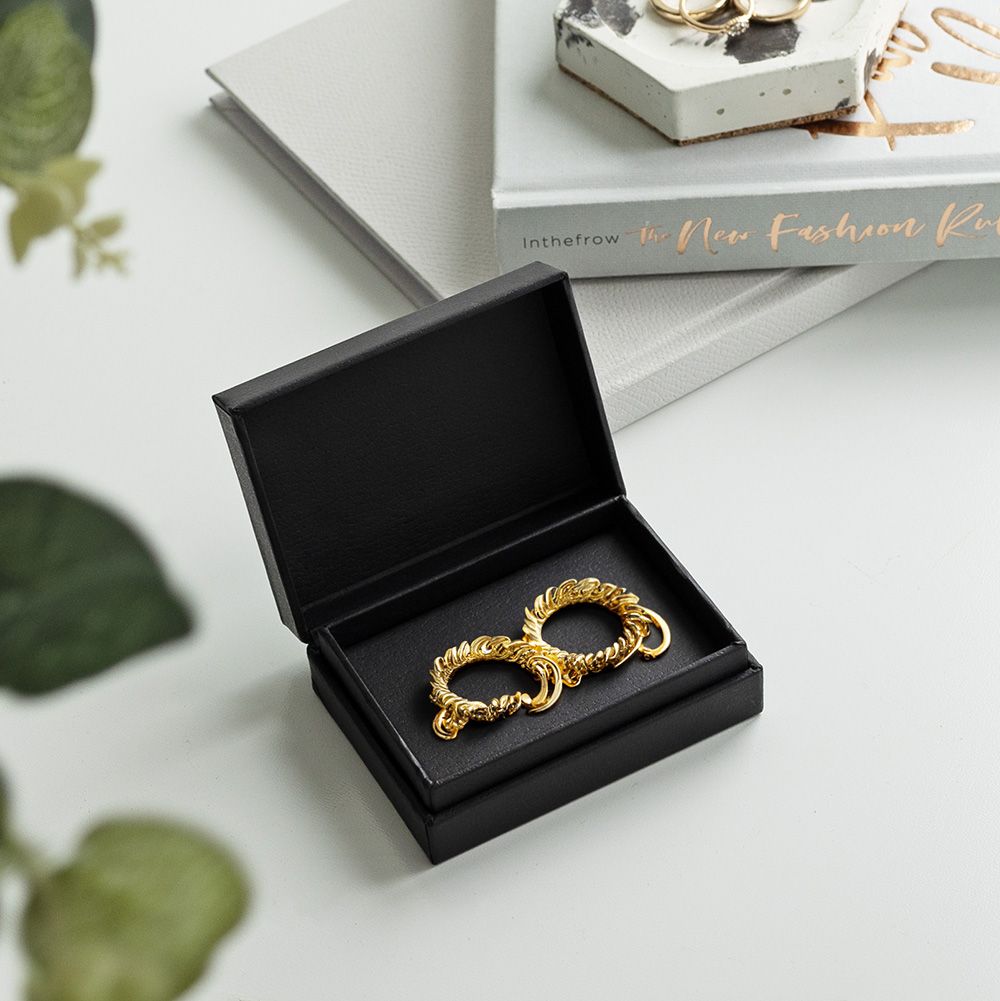
Lid Fit and Reveal: The Small Details That Change Everything
The reveal is the visible gap between the lid and the base. On gift boxes with lids, it needs to look even all the way around.
An uneven reveal can make a box look twisted, even if the base is technically usable. Too much movement can also cause lid rock on small boxes, where the lid shifts or wobbles when touched. Too little movement can make the box slow to open, which is not ideal for fulfilment teams or customers.
A good gift box with lid should feel controlled. The lid should come off or open smoothly, sit neatly when closed, and not drag heavily on one side.
Check these points:
- Is the reveal even at the front, back and sides?
- Does the lid sit level when closed?
- Does the lid move sideways when lightly touched?
- Does one corner lift before the others?
- Does the box still close cleanly after being opened several times?
For high-volume teams, the key is repeatability. One neat sample is useful. A consistent batch is better.
Hinge Choice Can Affect Lid Rock
Not all jewellery boxes open in the same way. Some have lift-off lids. Some have hinged lids. Some use magnetic closures, ribbon tabs or shoulder-style construction. Each format affects how square and stable the box feels.
Lift-Off Lids
A lift-off lid gives a clean, classic presentation, but the fit needs to be controlled. If the lid tolerance is too loose, it can rock. If it is too tight, packers may need extra time to open and close it.
Hinged Jewellery Boxes
A hinged jewellery box can feel premium and secure, but the hinge must be straight and balanced. If the hinge pulls unevenly, the lid may sit slightly back, twist to one side, or close with a visible offset.
Shoulder Boxes
A shoulder box can help guide the lid into place, which can improve alignment. However, it still needs accurate board cutting, clean wrapping and a flat base.
The best choice depends on how the box will be used. For fulfilment-led retail, think beyond the first unboxing moment. Think about packing speed, shelf display, stacking, returns handling, and how the box behaves after repeated opening and closing.
Stackability Is a Quality Check, Not an Afterthought
Jewellery boxes often need to stack before they ever reach the customer. They may be stacked in goods-in, on packing benches, in pick faces, in retail storage, or inside outer cartons.
A box that looks fine on its own can show problems once stacked. A slightly bowed base, uneven lid, or soft corner can create lean across a stack. At scale, that means messier storage, slower picking, and a higher chance of visible scuffs or crushed edges.
Before approving a jewellery box, stack several samples together and check:
- Does the stack sit straight?
- Do boxes slide easily against each other?
- Do lids take pressure evenly?
- Does the bottom box deform?
- Does the surface mark when stacked?
Shelf presentation matters too. If boxes are displayed in-store, the front edges need to line up cleanly. A small amount of corner drift can make a full display look less considered.
Tiny boxes can make a big impression. They can also make a small flaw look rather loud.

Cosmetic Rejects Versus Functional Rejects
Not every issue should be treated the same way. For a busy operations team, it helps to separate cosmetic rejects from functional rejects.
A cosmetic issue affects appearance, but the box may still protect and present the item well. Examples include a minor wrap mark, a small colour variation, or a tiny crease in a less visible area.
A functional issue affects how the box works. These are more serious because they can slow packing, cause damage, affect presentation, or create customer complaints.
Functional issues include:
- lid rock that makes the box feel unstable
- a base that does not sit flat
- a lid that will not close properly
- corners that split, lift, or catch
- a hinge that pulls the lid out of line
- boxes that cannot stack safely
- misalignment that makes the box look visibly twisted
The rejection point will depend on your product, price point, sales channel and customer expectations. A luxury jewellery box usually needs a tighter standard than a simple protective gift box.
Small-Box Squareness Checklist
Use this checklist before approving jewellery gift boxes for a larger order.
| Check | What to look for | Why it matters |
|---|---|---|
| Flat base | Box sits level on a flat surface with no rocking. | Helps stacking, packing and shelf display. |
| Even reveal | Gap between lid and base looks consistent on all sides. | Makes the box look square and premium. |
| Lid alignment | Lid sits straight, without twisting or overhang. | Reduces lid rock and improves presentation. |
| Corner sharpness | Corners are clean, firm and evenly wrapped. | Prevents visible construction flaws. |
| Open-close repeatability | Box opens and closes smoothly several times. | Shows whether the format works in real use. |
| Stack test | Several boxes stack without lean or slide. | Supports fulfilment and storage efficiency. |
| Hinge control | Hinged lid opens evenly and closes flush. | Prevents pull, twist and uneven pressure. |
| Surface finish | Wrap, print and finish stay clean after handling. | Protects the premium look through packing. |
This is the heart of tiny gift box quality control: do not only check one perfect sample from one angle. Handle it, stack it, open it, close it, and compare it against others.
What to Sample Before a Larger Order
Before you approve a jewellery box format, ask for samples that let you compare structure as well as style.
You should test:
- the exact size you plan to use
- the intended lid format or hinge style
- the finish you want, such as textured paper, foil, or printed wrap
- a small group of samples, not just one box
- how the box fits into your packing flow
- how it stacks in storage and transit cartons
- how it looks with the actual jewellery inside
Measure the things that matter to your operation. That may include external dimensions, internal fit, lid movement, reveal consistency, stack height, and how quickly a packer can open, fill, and close the box.
This is also the right stage to compare formats. A lift-off lid may look cleaner for one product. A hinged lid may feel more secure for another. A shoulder box may give the alignment control you need for a premium presentation.
For more on material choice at jewellery scale, read our guide to microflute versus rigid board for jewellery.
Read Microflute Versus Rigid Board Guide
Choosing Jewellery Boxes That Stay Neat at Scale
The best jewellery boxes are not just attractive. They are accurate, stable and repeatable.
For operations teams, that means fewer presentation issues, fewer packing slowdowns and fewer avoidable rejects. For customers, it means the box feels considered from the moment it arrives.
When reviewing a small jewellery box, look closely at the geometry. Are the corners true? Is the lid balanced? Does the base sit flat? Does the box stack cleanly? Does it still feel premium after a few open-close cycles?
A small box has a big job. Get the structure right, and the finish has a much better chance to shine.
Explore our jewellery gift boxes.
FAQs
Why do small jewellery boxes go out of square?
Small jewellery boxes go out of square when board cuts, wrap tension, corner turn-ins, or lid tolerances are slightly uneven. Because the box is small, even a tiny shift can look obvious.
What causes lid rock on rigid gift boxes?
Lid rock on small boxes is usually caused by loose lid tolerance, uneven board thickness, a base that is not flat, or a lid that has pulled out of line during wrapping or hinging.
How do you check if a jewellery box base is truly flat?
Place the box on a clean, flat surface and press lightly on each corner. If it tips, rocks, or shows a raised edge, the base may not be flat enough for neat stacking or premium presentation.
Are wrapped corners harder to keep neat on tiny boxes?
Yes. Wrapped corners are harder to control on tiny boxes because there is less space for the material to turn cleanly. Small amounts of bulk, tension, or misalignment are easier to see.
Does hinge choice affect how square a small box feels?
Yes. A hinge can affect lid alignment, opening feel and closure. If the hinge is not straight or balanced, it may pull the lid backwards or sideways, making the jewellery box feel less square.
What QC checks matter most for miniature rigid boxes?
The most useful checks are flat base, even reveal, lid alignment, corner sharpness, open-close repeatability, hinge control and stackability.
When should a small box be rejected for misalignment?
Reject a small box when misalignment affects function, presentation or packing speed. Clear lid rock, poor closure, visible twist, lifted corners, or unstable stacking are signs the issue is more than cosmetic.