




 Consultations
 Box Finder
 Help Centre


Letterbox Friendly Bag Choices That Fit
A paper mailer bag can look letterbox friendly when it is empty, then turn into a stubborn little pillow once it is packed.
That is the bit that catches growing e-commerce brands out. The bag looks slim. The product seems small. The order should fit. Then the mailer bulges at the middle, the flap creates a thick top edge, or the corners bunch up and the parcel no longer slides through the letterbox cleanly.
For customers, that can mean missed deliveries, collection cards, delays, and a less polished experience. For your team, it can mean repacking, complaints, and more time spent wondering which bag size should have been used.
This guide is about choosing paper mailer bags that are genuinely letterbox friendly once filled, sealed, and posted. Not carrier band optimisation. Not returns features. Just practical bag choices that help compact products arrive neatly, first time.
Need postal bags to get you started?
What Makes A Paper Mailer Bag Letterbox Friendly In Practice?
A letterbox friendly bag is not just short and narrow. It also needs to stay slim, flexible, and smooth once packed.
The final packed profile matters more than the flat bag size. A large empty bag may measure well on paper, but if it allows the product to move, fold badly, or bunch at the corners, it can become harder to post through a home letterbox.
A good letterbox paper mailer should:
- Hold the product without too much spare room.
- Keep the item spread flat rather than bunched.
- Seal without creating a thick ridge.
- Stay flexible enough to pass through tighter openings.
- Avoid hard, raised corners.
- Protect the product without looking overstuffed.
Letterbox friendly mailing bags are all about balance. Too small, and the product looks cramped. Too large, and the bag can fold, trap air, and create bulk where you do not want it.
Packed Profile Beats Width And Length
Width and length are only the starting point.
The most important question is: what shape does the mailer become after packing?
A thin T-shirt in the right paper mailing bag may stay flat and neat. The same T-shirt in a slightly oversized bag may slide to one end, bunch at the corners, and create a lumpy parcel. A small accessory may fit inside a large bag, but the excess paper can fold over itself and make the sealed edge too thick.
When testing paper mailing bags, check:
- The thickest point of the packed bag.
- Whether the product sits evenly.
- Whether the sealed flap adds bulk.
- Whether corners stay flat or bunch up.
- Whether the bag bends slightly without damaging the product.
- Whether branding still sits neatly on the front.
For first-time delivery, slim and controlled usually beats loose and hopeful.
Why Slightly Larger Does Not Always Mean Safer
It is easy to think a bigger bag gives you more room to play with. Sometimes it does. Sometimes it creates the exact problem you were trying to avoid.
A slightly larger bag can:
- Let the product move during handling.
- Encourage rushed or uneven folding.
- Create excess material at the sealed edge.
- Make the corners bulky.
- Look less premium when it arrives.
- Reduce the chance of smooth letterbox delivery.
For early-growth brands, overbuying too many bag sizes can also tie up cash and storage space. The answer is not a bag for every single product. The answer is a short, well-tested range that covers your bestsellers cleanly.
Your mailer should fit like a good jacket: enough room to move, not enough room to flap about.
Flat Paper Mailer Bags: Best For Slim, Flexible Products
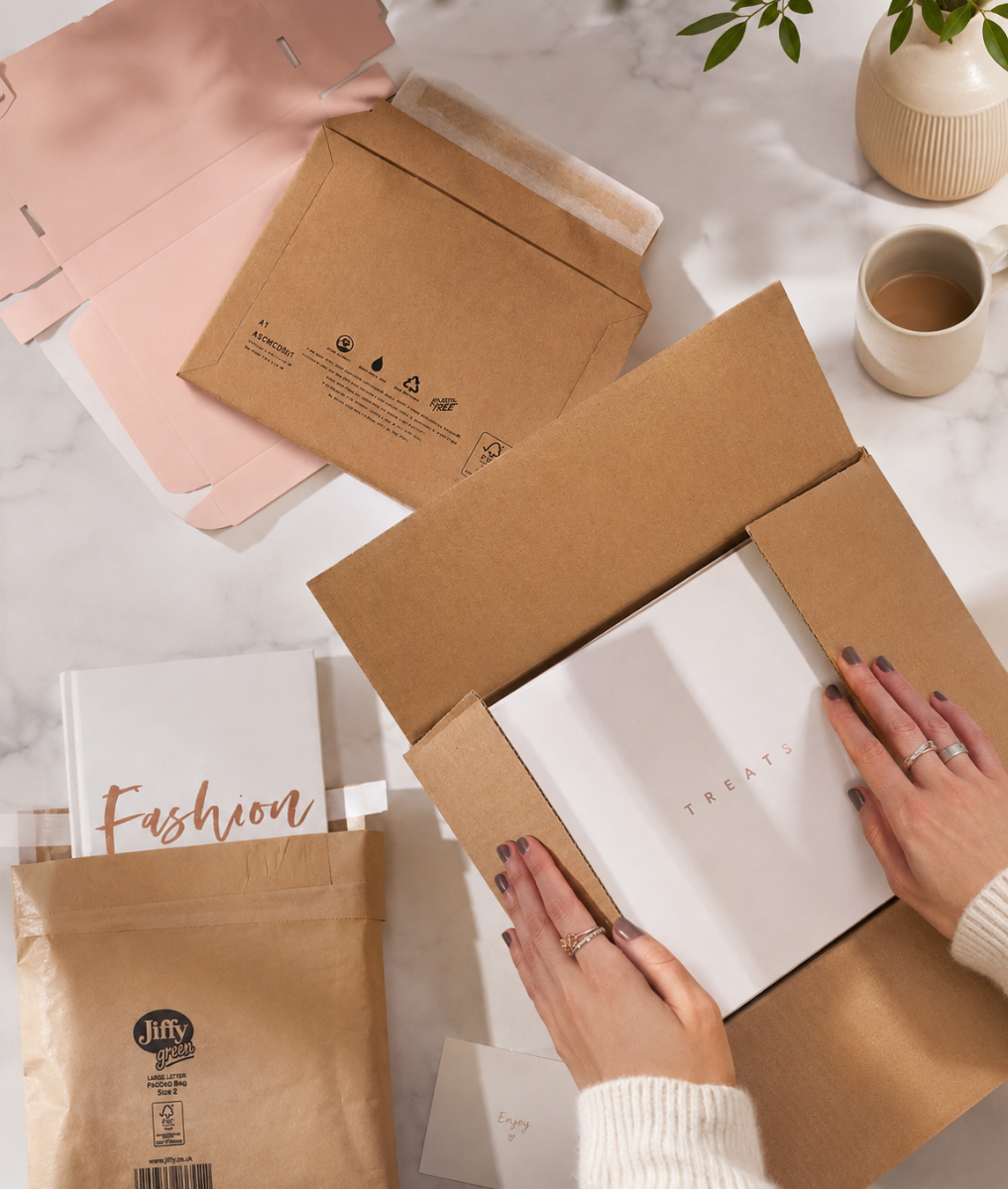
Flat paper mailing bags are often the best starting point for letterbox-friendly packing because they help control depth.
They work well for:
- Thin T-shirts.
- Lightweight tops.
- Babywear.
- Scarves.
- Socks.
- Hair accessories.
- Slim stationery.
- Flat craft items.
- Small soft goods.
- Pre-packed slim items.
Paper mailing bags for clothes are most likely to work well when the garment can be folded wide and flat. If the fold creates a thick block, the item may be too bulky for a letterbox-style bag.
A flat format can also help the packed order look cleaner. There is less temptation to overfill, fewer corners to expand, and a better chance that the parcel will slide through without a fight.
Gusseted Paper Mailers: Useful, But Not Always Letterbox Friendly
Gusseted paper mailers have extra side or base depth. That can be useful for slightly bulkier items, but it can also work against letterbox fit.
A gusset gives the product room to expand. That may protect the item and make the bag easier to seal, but it can also create a deeper packed profile. If your goal is letterbox delivery, that extra depth needs testing.
Use gusseted paper mailers when:
- The item needs more room to sit naturally.
- A flat bag strains at the seal.
- The product is not intended to stay very slim.
- You care more about neat packing than letterbox fit.
- You are happy for some orders to move out of letterbox-style delivery.
Be careful with gussets when:
- The item is soft and springy.
- The bag expands into a pillow shape.
- Corners become bulky.
- Staff start using the extra space to add more items.
- The product would be better held flat.
A gusset is not magic extra flexibility. It is extra volume, and volume has consequences.
Flap Length And Closure: The Quiet Fit Problem
The flap can decide whether a paper mailer bag feels neat or awkward.
If the flap is too short, the bag may strain or seal poorly. If it is too long, the extra paper can fold over the product and create a thick top edge. That thick edge can catch when the parcel is posted through a letterbox.
When checking flap closure, look for:
- A smooth seal with no raised ridge.
- No trapped air near the top.
- No folded paper sitting over the thickest part of the product.
- A closure that packers can repeat quickly.
- Enough allowance to seal securely without over-wrapping the item.
This matters for brown paper mailing bags, printed paper mailing bags, and custom paper mailing bags. A beautiful branded mailer still needs to close cleanly. Lovely print, lumpy parcel? Not the moment we’re after.
When To Use Small Paper Mailer Bags
Small paper mailer bags can be a smart choice for compact items, but only when they give the product enough room to sit flat.
They are useful for:
- Jewellery pouches.
- Small accessories.
- Patches or badges.
- Lightweight stationery.
- Slim beauty accessories.
- Small fabric items.
- Gift cards or note packs.
Do not choose the smallest possible bag just because the product fits inside. If the item has to be forced in, the corners push out, or the flap barely closes, the final pack may look poor and perform badly.
The right small mailer should make the order look considered, not squeezed.
When To Move From Bag To Slim Box
Sometimes a bag is not the best format.
If a product needs structure, corner protection, or a cleaner rectangular shape, a slim box may be better than forcing a bag to behave like one.
Move from a letterbox-style bag to a slim box when:
- The product creases too easily.
- The item has a fragile edge or corner.
- The packed bag becomes uneven or bulky.
- The product needs to stay flat.
- Presentation suffers in a soft mailer.
- The customer expects a more structured unboxing.
- The product is already close to the practical letterbox limit.
A slim box can sometimes improve the customer experience because it controls shape better. It may not be as flexible as a bag, but it can be more predictable.
For more on choosing packaging that avoids wasted space and delivery cost creep, read our guide to avoid oversize and DIM charges with smarter picks.
Simple Letterbox Fit Test For Founders
Before ordering paper mailer bags in volume, test them with real products. Not imagined products. Not the neatest sample. The real thing, packed on a normal day.
Use this test:
| Step | What To Do | What To Check |
|---|---|---|
| 1 | Fold or prepare the product as usual. | Does it naturally sit flat? |
| 2 | Place it into the chosen bag. | Is there enough room without excess space? |
| 3 | Seal the flap normally. | Does the closure stay smooth? |
| 4 | Press the packed bag lightly by hand. | Does it flatten or spring back? |
| 5 | Check the corners. | Are they flat, or do they bunch? |
| 6 | Slide it through a letterbox-style slot or test guide. | Does it pass without forcing? |
| 7 | Repeat with several items. | Is the result consistent? |
Test your largest size, thickest fabric, bulkiest colourway, and any product with tags, cards, tissue, or extra inserts. Those extras can change the final fit more than expected.
Product Examples: Which Bag Works Best?
| Product Type | Better Starting Point | Why |
|---|---|---|
| Thin T-shirt | Flat paper mailer bag | Can fold wide and stay slim. |
| Socks | Small paper mailer bag | Compact and flexible. |
| Lightweight scarf | Flat paper mailer bag | Spreads easily without much depth. |
| Babywear | Flat paper mailer bag | Usually soft and letterbox-friendly if folded well. |
| Hair clips or small accessories | Small mailer or slim box | Choose based on fragility and thickness. |
| Knitwear | Gusseted mailer or slim box | Often too bulky for flatter letterbox fit. |
| Multi-item clothing order | Larger mailer or slim box | Combined depth can build quickly. |
| Slim stationery | Flat paper mailer bag | Good fit when corners are protected. |
For e-commerce mailer bags UK brands can use confidently, build rules around your actual products rather than broad guesses.
Building A Short, Versatile Bag Range
Most growing brands do not need ten paper mailer bag sizes straight away.
A short range is easier to store, easier to train, and easier to reorder. It also helps avoid packing errors because your team has fewer choices to get wrong.
A practical starter range might include:
- One small paper mailer bag for compact accessories.
- One flat medium paper mailing bag for slim garments or soft goods.
- One larger or gusseted option for bulkier items that are not expected to fit through the letterbox.
- One slim box for products that need more shape control.
That gives you flexibility without turning your packing shelf into a bag library.
Decision Tree: Choose A Letterbox-Friendly Paper Mailer
| Question | If Yes | If No |
|---|---|---|
| Is the product flexible? | Try a paper mailer bag. | Consider a slim box. |
| Can it fold wide and flat? | Try a flat paper mailing bag. | Try a gusseted mailer or slim box. |
| Does the packed bag stay slim after sealing? | Continue letterbox testing. | Size up, change fold, or use a slim box. |
| Does the flap close without a thick ridge? | Keep testing. | Try a different bag depth or flap allowance. |
| Do corners stay flat? | Good sign for letterbox fit. | Reduce spare room or change format. |
| Can the result be repeated quickly? | Add to your approved bag list. | Keep sampling before bulk buying. |
Choose The Bag Around The Packed Order
Letterbox friendly mailing bags are not chosen by empty dimensions alone. They are chosen by the packed shape.
The right paper mailer bags should keep your products slim, neat, protected, and easy to post. That means checking the folded item, final sealed depth, flap behaviour, corner bulk, and whether the same result can be repeated across real orders.
For growing brands, the smartest move is not to buy every size. It is to sample a short list, test with your bestsellers, and build a small range that covers the orders you actually send.
Browse our paper mailer bags and sample a few letterbox-friendly sizes before ordering in volume.
FAQs
What Makes A Paper Mailer Bag Letterbox Friendly In Practice?
A paper mailer bag is letterbox friendly when it stays slim, smooth, and flexible after packing and sealing. The packed profile matters more than the empty bag size.
Do Gusseted Mailers Still Count As Letterbox Friendly?
Sometimes, but they need testing. Gusseted paper mailers add depth, which can help packing but may create a bulkier shape that is harder to post through a letterbox.
How Much Product Depth Is Too Much For A Flat Mailer?
If the product creates a raised middle, makes the seal strain, or springs back after you flatten the packed bag lightly, it may be too deep for a flat mailer.
Are Flap Closures Likely To Stop A Bag Fitting Through The Letterbox?
They can. A long or bulky flap fold can create a thick sealed edge, especially if it lands over the deepest part of the product. Always test the bag after sealing.
Which Products Work Best In Slim Paper Mailer Bags?
Slim paper mailer bags work best for thin, flexible products such as lightweight clothing, socks, scarves, stationery, flat accessories, and small soft goods.
Should I Size For The Folded Item Or The Sealed Final Pack?
Size for the sealed final pack. The folded item is only part of the fit. The flap, seal, corners, inserts, and trapped air can all change the final shape.
When Is A Slim Box Better Than A Letterbox-Style Bag?
A slim box is better when the product needs structure, crease protection, corner protection, or a more controlled shape than a soft paper mailing bag can provide.