






 Consultations
 Box Finder
 Help Centre


Who is this guide for
For UK eCommerce teams, ops managers and fulfilment leads who want to choose letterbox postal boxes that reliably hit the cheapest Royal Mail band, without skimping on protection or squashing products into submission.
Need ready-to-pack options?
Royal Mail parcel sizes at a glance (for boxes)
Your new “stick this to the packing bench” chart. Keep external dimensions within the limits, and allow a little wiggle room for tape and light crush.
| Band | Max external size (L x W x H) | Max Weight | Typical Use |
|---|---|---|---|
| Letter | 240 x 165 x 5 mm | 100g | Thin documents and cards) |
| Large Letter | 353 x 250 x 25 mm | 750g | Letter-box friendly postal boxes for small items, thin apparel, flat cosmetics |
| Small Parcel | 450 x 350 x 160 mm | 2kg | Shoe box styles, small kits, taller protective packs |
| Medium Parcel | 610 x 460 x 460 mm | 20kg | Bulk orders, hampers, layered void fill |
Rule of thumb: Stay 2-3mm under the 25mm thickness limit for Large Letter. Tape seams and slight crush are sneaky height-adders.
Thickness & girth rules (and how to measure them)
For boxes
Great news: You don’t need girth maths for standard rectangular boxes. Royal Mail uses fixed length/width/height limits for all the size bands.
For tubes & rolls
Girth does matter here. Small Parcel tubes follow: Length + 2 × diameter ≤ 1,040mm.
If you ship posters, grab a tailor’s tape…your life just got easier.
How to measure quickly (and accurately)
- Place an empty box on a flat surface.
- Measure external L × W × H with a rigid ruler.
- Tape the lid exactly how you would in production. Re-measure the height.
- Load your actual product, plus any tissue or wrap. Close and test with a postal slot gauge (or DIY one with cardboard, cut at 25mm).
- Record the external size that passes smoothly. No forcing, no squeezing!
Watch out for:
- Over-filled boxes bulging by 1-3mm.
- Tape seams that add height.
- Cushioned mailers marketed as “letterbox friendly” (but not once they’re packed).
Letterbox-friendly picks (what usually qualifies as Large Letter)
Aim for internal heights of 18-22 mm, which usually land just under the 25 mm external limit once taped.
Popular internal footprints that often pass:
- A5-ish: ~215 × 155 × 20mm (flat apparel, slim gift sets).
- DVD-ish: ~190 × 135 × 20mm (journals, small frames).
- A6-ish: ~165 × 110 × 20mm (jewellery boxes, small candles).
- Slim book: ~230 × 150 × 20mm (paperbacks, notebooks).
For a deeper dive
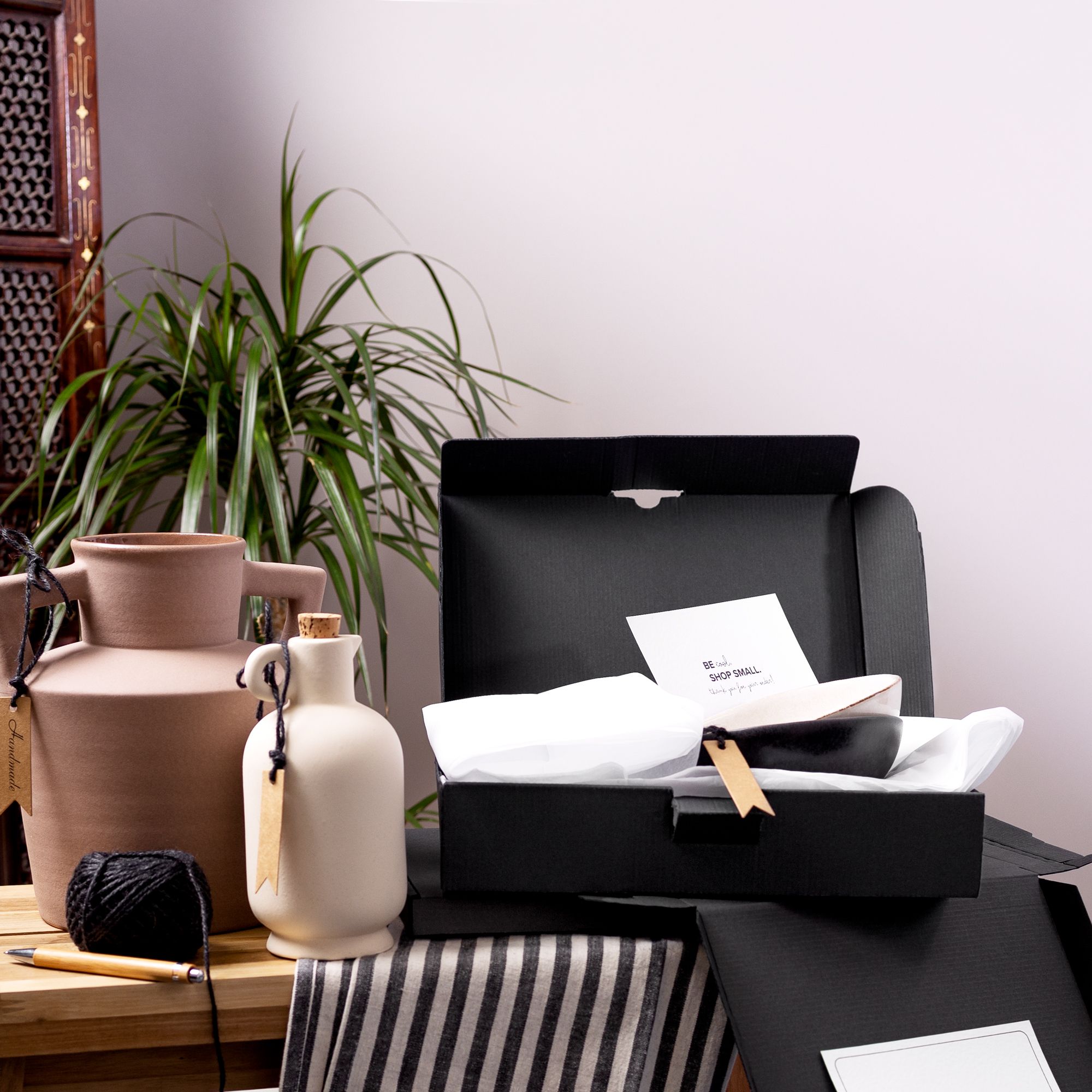
Letterbox friendly choices that really fit.
When Small Parcel is the smarter choice
(Or: don’t cram a tall product into a short box. It never ends well.)
Switch to Small Parcel when:
- You need proper protection (corner pads, taller fits).
- You’d have to drown the product in void fill to make it look thin.
- Multiple items shift around. Use dividers instead.
- Crushed returns from 25 mm packs are costing more than the savings.
Sometimes stepping up a band works out cheaper in the long run.
A repeatable measuring step-by-step guide
- Map products by packed height: ≤15 mm, 16-20mm, 21-25mm, 26-60 mm, >60mm.
- Pick a candidate box for each group. Wrap your items in tissue, paper, or other packing.
- Seal and tape, then measure external height with calipers or a rigid ruler.
- Slot test (25 mm). Log pass/fail and any notes (e.g., “lid seam +1.5 mm”).
- Build a quick cheat sheet: product → box code → band → void fill → weight
This is how you turn chaos into a beautifully organised packing line.
Void fill & protection (stay in band without damage)
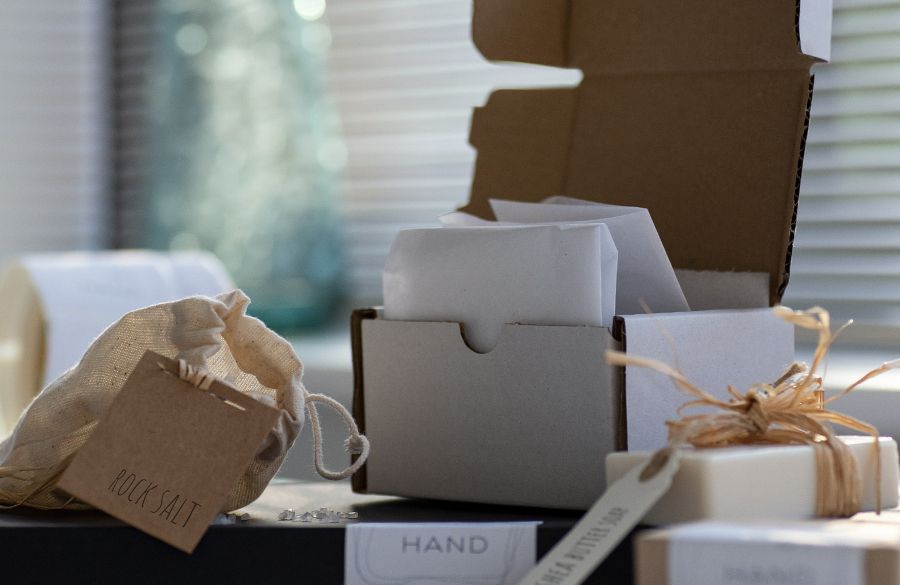
- Wrap in paper first, then pad corners only, this keeps the height low.
- Use thin corrugate pads (1-2 mm E-flute) top/bottom instead of bulky fill.
- Paper tape cross-wrap can stiffen lids without adding height.
- Avoid loose fill for Large Letter. It migrates and creates lid bulges.
Ops tips that save seconds (and surcharges)
- Pre-pack common bundles in letterbox-friendly sizes during quiet periods.
- Keep a slot gauge at every work bench. Make “slot test” a tick-box step.
- Place labels flat so barcodes don’t wrap around edges.
- Hold a stash of “just in case” Small Parcel boxes. It’s faster than forcing a too-tight Large Letter. (If your product is fighting the box, the box is losing.)
Sustainability note
Right-sized letterbox postal boxes reduce materials, cut emissions per order, and boost first-time delivery rates. Choose recyclable boards and paper tape for an easy curbside-recyclable pack.
Edge cases (worth reading before posting)
- Rigid mailers can count as Large Letter, but add corner protection for brittle items.
- Nested boxes only work if the total height stays < 25mm after taping.
- Heavy but thin items: Large Letter caps at 750g. Over the limit = Small Parcel, even if it fits the slot.
Printable quick card (copy to your bench)
- Large Letter: 353 × 250 × 25mm, ≤ 750g
- Small Parcel: 450 × 350 × 160mm, ≤ 2kg
- Medium Parcel: 610 × 460 × 460mm, ≤ 20kg
- Tube rule (Small Parcel): length + 2 × diameter ≤ 1,040mm. Pro tip: Stay 2-3mm under height caps.
Need ready-to-pack options?