








 Consultations
 Box Finder
 Help Centre



Maintaining Square Panels Around The Hinge Of Magnetic Gift Boxes
A magnetic gift box should open smoothly, close neatly, and stay square through repeated use.
When the panels around the hinge begin to twist or move out of alignment, the lid may rock, sit unevenly, or resist closing in its intended position. The box can still look beautiful on a screen, but the moment it reaches the recipient, the structure tells the real story.
For beauty, fashion, jewellery, and luxury retail brands, that matters. The hinge influences the tactile experience of the box, the consistency of magnetic alignment, and the impression of quality created before the product is revealed.
Keeping panels square around the hinge depends on more than careful assembly. Grain direction, scoring depth, board construction, covering materials, adhesive control, and the wider geometry of the box all need to work together.
Need Magnetic Boxes to get you started?

What Does Keeping Panels Square Around The Hinge Mean?
Keeping panels square around the hinge means designing and assembling the lid and base so their edges, corners, and hinge lines remain correctly aligned when the box is open and closed. The panels should move without twisting, bowing, rocking, or pulling the lid away from its intended position.
A stable hinge structure usually depends on five principles:
- Select board and grain direction for the intended fold movement.
- Set scoring to suit the specific board construction.
- Maintain accurate panel dimensions and right angles.
- Apply covering materials and adhesive consistently.
- Test completed boxes through repeated opening and closing.
There is no universal scoring depth or hinge allowance for every magnetic gift box. These details should be established through material-specific trials and approved finished samples.
Why Panel Squareness Matters
A luxury box is experienced through movement as well as appearance.
The recipient notices how the lid lifts, whether the hinge feels controlled, and whether the panels meet cleanly when the box closes. A lid that rocks or lands unevenly can make an otherwise premium design feel less resolved.
Maintaining square panels near the hinge can support:
- Cleaner magnetic closure alignment.
- Smoother repeated opening.
- More even gaps around the lid.
- Reduced twisting and lid rock.
- Better consistency across production units.
- Improved packing and presentation.
- A more assured premium unboxing experience.
- Greater confidence in repeat orders across markets.
Good structural design is rarely the loudest feature of a box. It is the detail that allows every visible feature to perform properly.
What Is Lid Rock?
Lid rock is the unwanted movement of a lid when it does not sit evenly against the box.
It may appear as:
- One corner lifting when another is pressed.
- The front edge sitting higher on one side.
- The lid shifting before the magnets engage.
- A visible twist when the box is viewed from above.
- Uneven contact between the lid and base.
- Movement that becomes more noticeable after repeated opening.
Lid rock can be caused by several connected issues, including inaccurate panels, unsuitable grain direction, inconsistent scoring, adhesive tension, covering distortion, hinge misalignment, or internal components pushing against the lid.
The magnet may reveal the problem because it pulls the lid towards the closure point, but it is not always the underlying cause.
How Grain Direction Affects Magnetic Gift Box Design
Board contains fibres that tend to run predominantly in one direction. This is known as the grain direction.
The board may bend and respond differently depending on whether a fold runs with or across that grain. Grain direction can influence:
- Folding resistance.
- Hinge movement.
- Surface cracking.
- Panel stiffness.
- Warping.
- Recovery after repeated opening.
- The amount of tension held around a scored line.
For a hinged magnetic box, the grain should be considered at the design stage rather than discovered during production.
An unsuitable orientation may make the hinge resist movement or place uneven stress across the lid. Over time, this can contribute to distortion or affect how naturally the lid returns to its closed position.
The correct grain direction depends on the selected board, dimensions, covering system, and construction. Confirm it with the packaging manufacturer through physical samples rather than applying a rule from a different box.
How Scoring Depth Affects Lid Performance
A score creates a controlled line that helps the board fold in the intended position.
If the scoring is too shallow for the material, the hinge may feel stiff or force the surrounding panels to bend. If it is too deep, it may weaken the structure, create an uneven fold, or affect the covering material.
The objective is a clean, controlled hinge that moves without placing unnecessary stress on the lid or base.
Scoring performance is affected by:
- Board type and thickness.
- Grain direction.
- Number of material layers.
- Covering paper or fabric.
- Lamination.
- Crease width.
- Tooling.
- Adhesive distribution.
- Intended opening angle.
- Expected frequency of use.
Scoring should therefore be tested in the complete material construction. An uncovered board sample may fold differently once paper, lamination, lining, and adhesive have been added.
Grain Direction And Scoring Must Be Tested Together
Grain direction and scoring depth should not be treated as separate design decisions.
A score that performs well in one grain orientation may behave differently when the board is rotated. Similarly, changing the board or covering material can affect the fold even if the score setting remains the same.
During sampling, assess:
- The force needed to open the lid.
- Whether the fold stays on the intended line.
- Whether the panels remain flat.
- Whether the covering wrinkles or cracks.
- Whether the lid twists during movement.
- Whether the box returns to a square closed position.
- Whether performance changes after repeated use.
The right result is not simply a hinge that moves. It is a hinge that moves predictably while allowing the whole box to remain aligned.
Start With Accurate Panel Geometry
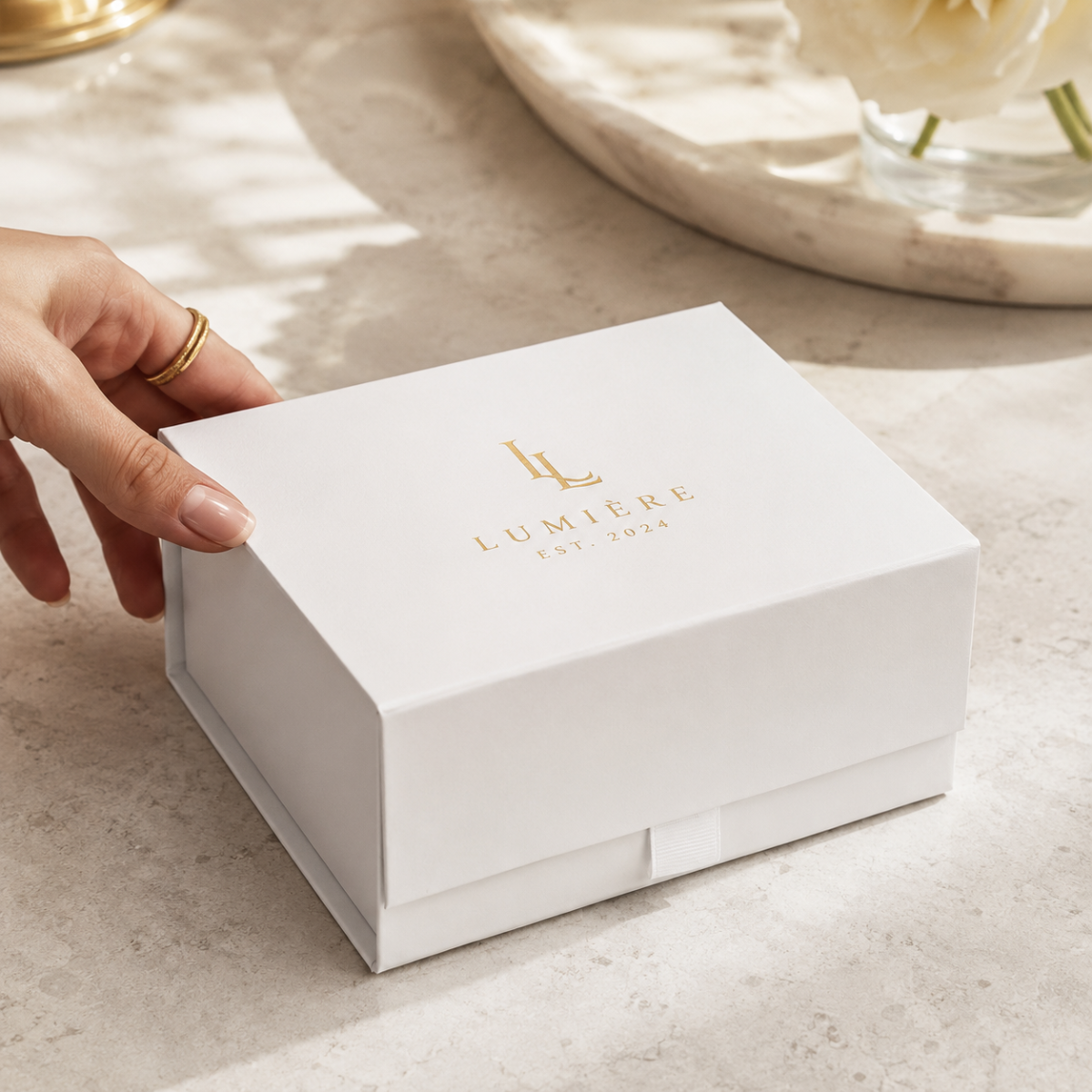
A well-designed hinge cannot correct panels that are already out of square.
The lid, base, front panel, side panels, and closure flap should be dimensioned so they meet in the intended positions without being pulled or forced.
Key checks include:
- Opposing sides are consistent in length.
- Corners meet at the intended angle.
- The lid and base centre lines align.
- The hinge line is straight.
- The front closure remains level.
- Side gaps are even.
- The lid does not bind against the base.
- The shoulder or insert does not push the structure outwards.
Small dimensional inconsistencies can become more visible once the lid begins to move. They may also make magnetic alignment appear inconsistent, even where the magnetic components have been placed correctly.
Control The Hinge Line
The hinge line should act as a stable, predictable pivot.
If it curves, wanders, or changes depth along its length, the lid may rotate unevenly. One side can begin moving before the other, introducing twist into the structure.
Production controls may include:
- Fixed tooling and reference points.
- Documented board orientation.
- Consistent scoring pressure.
- Controlled adhesive application.
- Alignment fixtures during assembly.
- Flat curing or setting conditions.
- Inspection against an approved sample.
The appropriate controls depend on the production method and box design. What matters is that the hinge is created consistently rather than judged by eye at the end.
Consider The Effect Of Covering Materials
Decorative papers, fabrics, laminations, and linings contribute to the premium appearance of magnetic box packaging. They can also introduce tension.
Covering material may pull across the hinge as adhesive sets, particularly if it is applied unevenly or stretched during assembly. The result can be a lid that curves, twists, or no longer returns to its intended position.
During development, assess:
- Material grain or directional behaviour.
- Stretch and recovery.
- Adhesive compatibility.
- Moisture response.
- Wrapping tension.
- Lamination stiffness.
- Surface cracking around the fold.
- The effect of internal and external layers working against each other.
Beautiful finishes need structural discipline behind them. Otherwise, the covering can begin making design decisions of its own.
Allow Adhesive To Set Consistently
Adhesive application can affect whether panels remain flat and square.
Uneven coverage, excess adhesive, or inconsistent setting conditions may introduce local tension. A panel can appear correct immediately after assembly, then move as the adhesive cures.
Agree with the supplier:
- The adhesive system used.
- The intended application amount.
- The areas where adhesive is applied.
- The setting or curing method.
- How panels are held during this stage.
- When structural quality checks are completed.
- How changes in humidity or temperature are managed.
These controls are especially important when production is spread across multiple suppliers or regions.
Check The Shoulder And Magnet Relationship
In shoulder-style magnetic boxes, the internal shoulder helps locate and support the lid. If it is out of square, too high, or positioned inconsistently, it may push the lid away from its intended alignment.
The shoulder, hinge, panels, and magnetic closure need to work as one system.
Check that:
- The shoulder is square within the base.
- Its height is consistent.
- It does not force the lid outwards.
- The lid clears it during opening.
- The front edge closes without binding.
- The magnets engage without pulling the structure sideways.
For more guidance, read Shoulder and magnet working together.
Repeated Opening Changes The Test
A box that performs correctly once has passed a demonstration, not a lifecycle test.
Repeated opening can reveal:
- Score lines that gradually soften.
- Hinges that begin to twist.
- Covering material that creases.
- Adhesive areas that lift.
- Magnets that no longer align consistently.
- Lid rock that was not visible in the first cycle.
- Changes in how the lid rests when open.
Testing should reflect how the packaging is expected to be used.
A campaign box intended for one presentation may have different performance expectations from a keepsake box designed to be reopened and stored. Define the intended use before approving the construction.
How To Test Whether Panels Remain Square
Use a repeatable assessment rather than relying on a quick visual check.
1. Place The Box On A Flat Surface
A stable surface makes rocking and uneven contact easier to identify.
2. Inspect The Closed Box
Check the front edge, side gaps, corners, lid level, and magnetic alignment.
3. Open The Lid Naturally
Lift it from the intended opening point without supporting or guiding one side.
4. Watch The Hinge Movement
Both sides should move together without visible twist or hesitation.
5. Check The Open Position
Confirm that the lid does not lean or pull one side of the base out of square.
6. Close The Box Without Adjustment
The lid should return to its designed position without being pushed sideways.
7. Repeat The Cycle
Open and close the box several times to identify changes in movement or alignment.
8. Compare Multiple Units
Review samples from different positions in the trial or production batch.
9. Test With The Intended Contents
The product and insert may affect the base, shoulder, or lid position.
10. Record The Result
Use an agreed checklist so that different teams assess the same characteristics.
Panel And Hinge Quality Checklist
| Check | Pass Standard |
|---|---|
| Panel geometry | Opposing edges and corners remain aligned |
| Hinge line | Straight and consistent across its length |
| Grain direction | Confirmed for the approved board construction |
| Score performance | Clean fold without excessive stiffness or weakness |
| Lid movement | Opens without twist or sideways pull |
| Closed position | Lid sits level with even gaps |
| Lid rock | No noticeable movement on a flat surface |
| Surface finish | No cracking, wrinkling, or visible distortion |
| Magnetic alignment | Closure engages without forcing the lid |
| Repeatability | Performance remains consistent across samples |
| Repeated opening | Structure retains alignment through the agreed test |
| Packed performance | Product and insert do not distort the box |
Detailed acceptance criteria should be agreed with the packaging supplier before production.
Common Hinge And Panel Alignment Mistakes
Treating The Hinge As A Decorative Detail
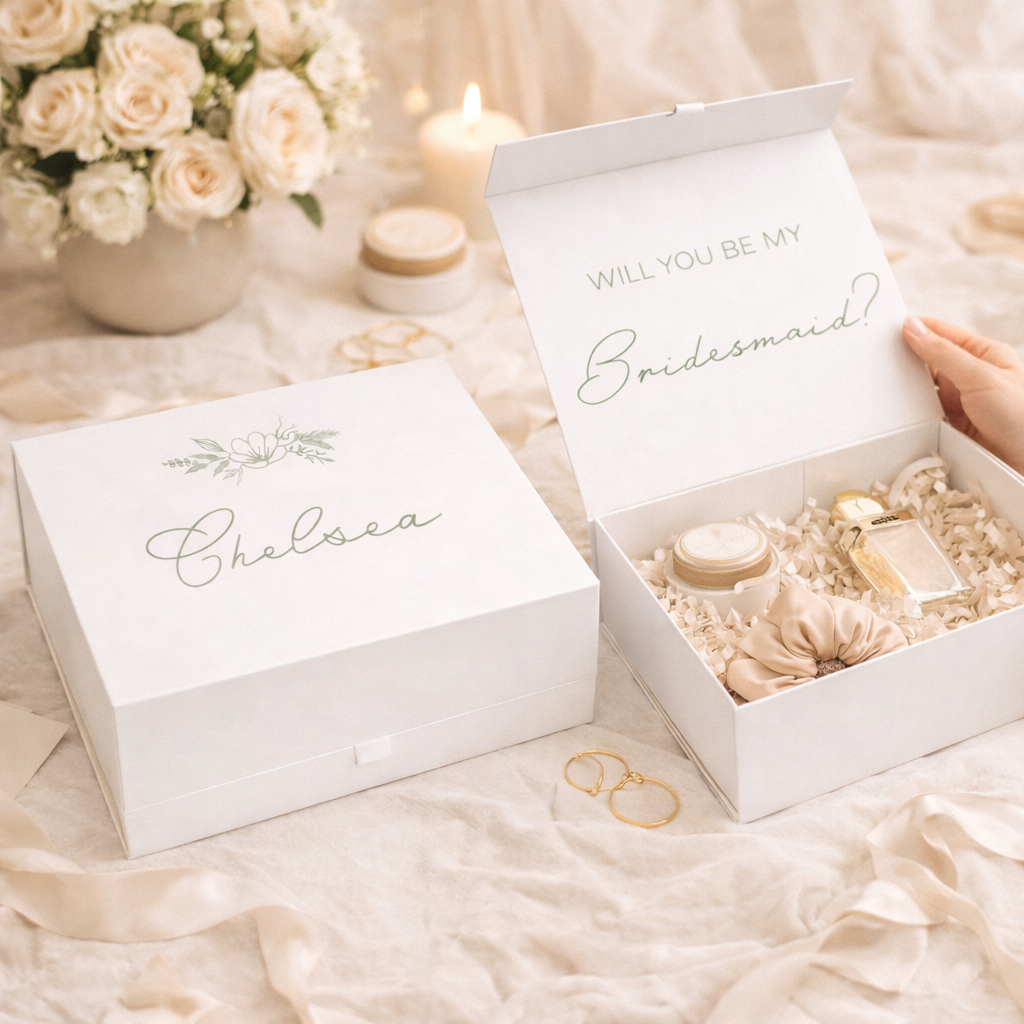
The hinge is a structural component. Its board orientation, scoring, covering, and assembly need the same attention as visible print and finishes.
Selecting Scoring Before Final Materials
The complete material build affects fold behaviour. Test the final board, covering, lamination, lining, and adhesive.
Ignoring Grain Direction
Board orientation can affect stiffness, movement, and recovery around the hinge.
Using Stronger Magnets To Hide Misalignment
A stronger magnetic pull may force the lid closed, but it does not correct twisted panels or an unstable hinge.
Approving Only The Closed Appearance
The box must be assessed during opening, at the fully open position, and after repeated cycles.
Checking Only One Sample
A single unit does not show production consistency.
Changing Board Or Covering Without Retesting
Material changes may alter hinge movement and panel stability.
Failing To Define Lid Rock
Set a clear visual and functional acceptance standard so suppliers and quality teams make consistent decisions.
Intelligent Packaging Design For Luxury Brands
Intelligent packaging design connects aesthetics with structure, production, use, and end-of-life considerations.
For luxury brands, a premium unboxing experience should not depend on fragile tolerances or repeated adjustment at the packing bench. The structure should support the desired presentation naturally.
A well-resolved magnetic gift box can help deliver:
- Controlled, smooth lid movement.
- Clean closure alignment.
- Consistent photography and display.
- Faster quality checks.
- More dependable repeat production.
- Reduced rejection and rework.
- A presentation aligned with the product’s positioning.
The engineering should be almost invisible. The confidence it creates should not be.
Packaging Strategies For Beauty Brands
Beauty packaging often combines rigid boxes with glass products, inserts, decorative finishes, and detailed print.
These components can create structural demands around the hinge. A heavy product may affect how the base sits, while a tall or tight insert may press against the lid.
Packaging strategists should assess:
- Product weight and distribution.
- Insert height.
- Component movement during transport.
- Resistance from the lid lining.
- The effect of foil, varnish, or lamination near the fold.
- Repeated opening at retail or during content creation.
- Consistency across sets and seasonal editions.
The final sample should include the actual or representative product configuration.
Packaging Efficiency In Fashion And Jewellery
Fashion and jewellery gifting often involves multiple sizes, seasonal variations, and global fulfilment requirements.
Consistent hinge construction can simplify quality control across a packaging family. However, a successful specification should not be copied blindly from one size to another.
Changing the panel dimensions may alter:
- Lid weight.
- Hinge leverage.
- Board behaviour.
- Magnetic alignment.
- The effect of the covering material.
- How visible any distortion becomes.
Each size should be sampled and approved in its intended construction.
Global Supplier Consistency
When several suppliers or production sites are involved, the physical design must be supported by clear documentation.
A production specification may include:
- Approved board and grain orientation.
- Panel dimensions.
- Hinge and scoring details.
- Covering and lamination materials.
- Adhesive system.
- Assembly reference points.
- Magnet and shoulder positioning.
- Quality-check procedure.
- Repeated-opening test.
- Approved physical sample.
- Process for managing material substitutions.
A signed master sample remains valuable because movement and tactile quality can be difficult to communicate through drawings alone.
Any material substitution should be reviewed before production, even when the replacement appears visually similar.
Sustainability And Structural Efficiency
Sustainable packaging solutions should be supported by specific evidence and sound design.
A box that is rejected because of distortion or poor closure performance has already consumed board, paper, adhesive, energy, production time, and transport capacity. Improving structural consistency may help reduce avoidable waste and rework.
Packaging teams can also assess:
- Whether board specifications are appropriate rather than excessive.
- Recycled content percentages where available.
- FSC-certified options.
- Plastic-free finish options.
- Opportunities to reduce unnecessary layers.
- Whether the box is designed for repeated use.
- How components can be separated.
- Production waste controls.
- Supplier documentation and traceability.
Avoid unsupported claims such as “100% sustainable” or “zero-waste”. State the material, certification, standard, or percentage that supports the claim.
Regulatory And Compliance Considerations
The supplied brief does not identify specific regulations for this box construction, so compliance requirements should be confirmed for the product, market, materials, and claims involved.
Packaging strategists should work with internal legal, compliance, procurement, and sustainability teams to review:
- Material restrictions.
- Chemical and coating requirements.
- Labelling obligations.
- Product-specific packaging rules.
- Market-specific recycling information.
- Sustainability claims.
- Supplier evidence.
- Record-keeping requirements.
- Changes introduced by local regulations.
A luxury appearance does not remove the need for precise, supportable claims and compliant material choices.
Balancing Cost With Better Hinge Design
Improving panel alignment may require development time, sampling, tooling review, or tighter process controls.
The commercial assessment should also consider the cost of leaving the problem unresolved.
Potential hidden costs include:
- Rejected boxes.
- Slower packing.
- Additional quality inspections.
- Rework.
- Inconsistent product photography.
- Complaints about damaged or misaligned packaging.
- Emergency replacement orders.
- Poor repeat-order consistency.
- Lost confidence across global teams.
The most cost-effective design is not always the one with the lowest initial unit price. It is the design that performs consistently across production, fulfilment, and customer use.
Questions To Ask Your Packaging Supplier
Ask prospective suppliers:
- How is board grain direction selected and recorded?
- How is scoring established for the final material build?
- Can the completed hinge construction be sampled?
- How is panel squareness checked?
- How is lid rock defined and inspected?
- Are boxes tested through repeated opening?
- How are covering tension and adhesive application controlled?
- Can the approved construction be repeated globally?
- What happens if a material is substituted?
- How are quality issues documented and resolved?
- Which material certifications and sustainability evidence are available?
- Can an approved physical sample be retained for repeat orders?
Clear answers create more confidence than a promise that the box will “look premium”.
Explore Magnetic Gift Boxes In The UK
A magnetic box should feel as considered in motion as it looks on the shelf.
Explore our range of magnetic gift boxes in the UK and discuss grain direction, scoring, hinge construction, materials, and sample testing before approving your next packaging project.
FAQs
How Does Maintaining Square Panels Around The Hinge Improve Magnetic Gift Boxes?
Square panels allow the lid to move and close in its intended position without twisting or rocking. This supports cleaner magnetic alignment, a more consistent appearance, and smoother repeated opening.
What Is The Impact Of Grain Direction On Magnetic Gift Box Design?
Grain direction influences how the board bends, resists movement, and responds around a score. An unsuitable orientation may contribute to stiffness, distortion, or uneven recovery around the hinge.
How Does Scoring Depth Affect The Performance Of The Lid?
Scoring controls where and how the board folds. A score that is too shallow may create excessive resistance, while one that is too deep may weaken the structure or affect the covering material.
What Are The Consequences Of Lid Rock During Repeated Opening?
Lid rock can create uneven closure, visible misalignment, and an inconsistent tactile experience. It may also affect magnetic engagement and make the packaging feel less resolved.
How Can Intelligent Packaging Design Improve Luxury Unboxing?
Intelligent design aligns the board, hinge, panels, covering, insert, and closure so the box works naturally. The result is a controlled opening movement and a more consistent premium presentation.
What Role Does Packaging Design Play In Sustainability Commitments?
Accurate design may reduce rejected units, rework, and unnecessary material use. Sustainability claims should still be supported by specific information about materials, recycled content, certification, and construction.
How Can Packaging Strategists Support Regulatory Compliance?
Confirm requirements for the product, market, materials, finishes, labels, and environmental claims. Work with internal compliance teams and request supporting documentation from suppliers.
What Best Practices Maintain The Structural Integrity Of Magnetic Gift Boxes?
Confirm grain direction, test scoring in the final materials, maintain accurate panel geometry, control adhesive and covering tension, and inspect multiple completed units through repeated opening.
How Does Magnetic Gift Box Design Influence Brand Desirability?
The structure shapes how the box feels when handled and opened. Smooth movement, clean alignment, and consistent presentation can reinforce the care and quality associated with the brand.
What Should Strategists Consider When Designing Luxury Magnetic Boxes?
Consider panel geometry, board grain, scoring, covering materials, hinge movement, shoulder position, magnetic alignment, product weight, repeated use, supplier consistency, and supported sustainability claims.