












 Consultations
 Box Finder
 Help Centre


Choosing Sustainable Window Materials For Food Boxes
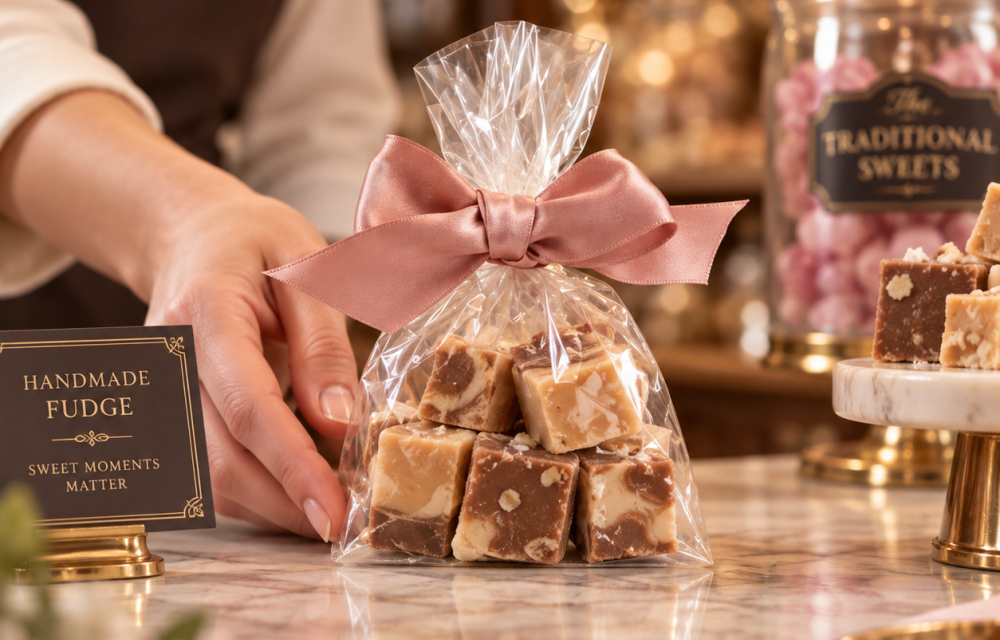
Sometimes the best product photograph is the product itself.
A clear window lets customers see glossy chocolates, iced biscuits, colourful salads, handmade cakes, or neatly arranged confectionery before they open the box.
That visibility can be brilliant for retail.
The material behind it deserves more thought than “something clear”, though.
When comparing food contact compliant window materials, PET, PLA, and cellulose can all appear on the shortlist. Each offers different characteristics, and none should be chosen on one sustainability word alone.
You need to consider:
- Whether the material is suitable for its intended food contact.
- How clear it remains during real use.
- Whether fogging is likely.
- Temperature and moisture conditions.
- How the window is attached to the rest of the pack.
- What verified sourcing or environmental information is available.
- What will realistically happen to the packaging after use.
Because “plant-based”, “compostable”, “recyclable”, and “plastic-free” are not four ways of saying the same thing.
Need food packaging solutions to get you started?
Why Put A Window In Food Packaging?
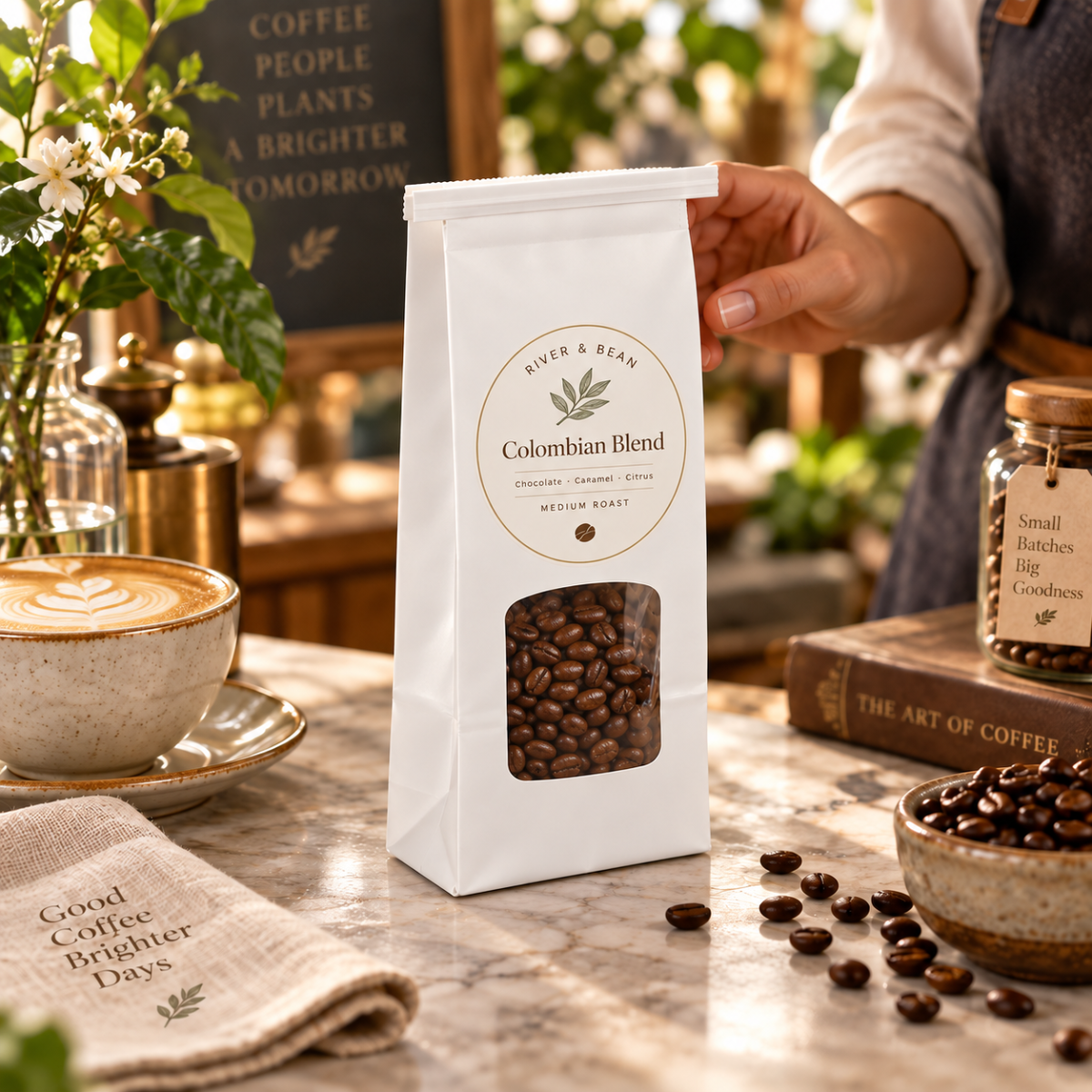
Windows can create an immediate connection between the customer and the product.
For artisan foods in particular, that can be valuable.
If your chocolates are hand-finished, your biscuits individually decorated, or your patisserie made to be looked at before it is eaten, hiding everything behind opaque board can feel like doing the product a disservice.
A window may help with:
- Product visibility.
- Retail presentation.
- Customer confidence.
- Colour and freshness cues.
- Premium appearance.
- Faster visual checking by retail or fulfilment teams.
- Differentiating flavours or varieties.
- Social-media presentation.
But every component should earn its place.
If the customer does not need to see the food, adding another material simply because “boxes like this usually have windows” may not be the best design decision.
The first sustainability question is often not which window material?
It is do we need the window at all?
Food Contact Comes Before Material Marketing
Before comparing environmental credentials, establish whether the window will actually come into contact with food.
If it will, the material needs to be suitable for its intended food-contact use.
UK government guidance states that businesses packaging food themselves must use packaging suitable for food use. It also notes specific requirements around materials including plastics and regenerated cellulose film, with written compliance evidence required in relevant cases.
The useful supplier question is therefore not simply:
“Is this food safe?”
Ask:
“Is this exact film suitable for contact with this food, under these temperatures and conditions, for the intended contact time?”
That matters because a material might be suitable for one application and inappropriate for another:
- Chocolate.
- Fresh fruit.
- Hot bakery.
- Fatty food.
- Frozen products.
They can all ask something different of the window.
PET, PLA, And Cellulose: What Is The Difference?
These three materials may all create a transparent window, but they come from different material families and have different disposal routes.
PET
PET stands for polyethylene terephthalate.
It is a conventional thermoplastic widely used for food and drink packaging and can offer excellent clarity, strength, and consistent performance.
Clear PET is also an established material within UK recycling systems. Recycle Now identifies PET, resin code 1, as widely recycled, and clear plastic pots, tubs, and trays are commonly accepted packaging formats.
That does not automatically mean every PET window attached to every cardboard box will be recycled.
Format matters, attachment matters, size matters, whether the customer can separate it matters.
And local collection systems still need to be considered.
PLA
PLA, or polylactic acid, is a bio-based polymer often made from renewable plant-derived feedstocks.
It can be transparent and has been used in food packaging applications including trays, lids, and films. PLA grades can also be designed to meet recognised industrial compostability standards.
But “bio-based” does not mean “put it in the recycling bin”.
Compostable plastics are not designed to enter conventional plastics recycling. Recycle Now advises that industrially compostable material needs access to an appropriate composting collection or facility, which is not universally available.
So the infrastructure around the package matters just as much as what the package is made from.
Cellulose Film
Transparent regenerated cellulose films can be made using cellulose derived from plant sources such as wood pulp.
Specific cellulose films are available for direct food-contact applications and can offer very high clarity. Some certified products are also compostable, including grades designed for home or industrial composting.
But, again, do not generalise from one product to every cellulose film.
Coatings and barrier layers vary. Food-contact conditions vary. Composting certifications vary. Some cellulose films may have additional coatings to provide sealing, moisture-barrier, or other performance properties.
Read the specification for the actual product.
PET Vs PLA Vs Cellulose At A Glance
| Consideration | PET | PLA | Cellulose Film |
|---|---|---|---|
| Transparency | Typically excellent | Typically high | Typically high |
| Material origin | Usually fossil-based, recycled content may be available | Usually bio-based | Cellulose from plant-derived feedstock |
| Food-contact use | Food-contact grades widely available | Food-contact grades available | Food-contact grades available |
| Conventional plastic recycling | Established PET recycling routes exist | Should not normally enter conventional plastic recycling when compostable | Depends on exact product, generally not a conventional plastic recycling substitute |
| Compostability | No | Some grades/products certified industrially compostable | Some products certified home and/or industrially compostable |
| Anti-fog | Usually requires suitable treatment or coating | Available through formulated films/treatments | Depends on grade and construction |
| Heat performance | Depends on grade and construction | Standard PLA can have temperature limitations | Depends heavily on film grade |
| Best question to ask | Is this format genuinely recyclable after conversion into my pack? | Where will my customer realistically compost it? | What certification and coating apply to this exact film? |
None wins automatically.
The correct material is the one whose performance and realistic end-of-life route fit the application.
PET: Strong Clarity With An Established Recycling Story
PET is popular for a reason.
It can give food packaging windows the clear, polished look retailers want while providing consistent physical performance.
PET also benefits from an established recycling stream. In the UK, PET is identified as a widely recycled polymer, while clear pots, tubs, and trays form part of common household plastic recycling collections.
Recycled PET, or rPET, is also used in food packaging where the material and process meet the appropriate regulatory requirements. Commercial food-grade rPET applications already exist.
That makes PET worth considering when:
- High transparency matters.
- Consistency matters.
- The packaging needs good physical durability.
- An established recycling route is a priority.
- Recycled-content options are available and appropriately specified.
But look at the complete package.
A beautifully recyclable piece of PET permanently bonded into a construction that cannot realistically be separated may have a different end-of-life outcome.
Material choice and packaging design need to have the same conversation.
PLA: Renewable Feedstock Does Not Solve Disposal Automatically
PLA can be appealing for brands trying to reduce reliance on fossil-derived materials.
It can offer good clarity and is used in food packaging applications. Certain PLA products meet recognised compostability standards.
The word to concentrate on is certain.
Do not label every PLA window “compostable” without evidence relating to the finished material.
And if it is certified industrially compostable, ask the next question:
Can the customer actually access the appropriate collection route?
Recycle Now states that compostable plastics should not go into conventional plastic recycling and that availability of industrial composting routes varies.
WRAP similarly recommends treating compostable packaging as an application-specific choice supported by appropriate collection and composting infrastructure, rather than a universal replacement for recyclable packaging.
A technically compostable window that usually ends up in general waste is a very different proposition from one used in a controlled setting with a verified composting route.
Cellulose: Clear, Plant-Derived, But Check The Exact Film
Cellulose film can be particularly interesting for brands looking for a transparent window derived from renewable feedstocks.
Specific regenerated cellulose films can provide excellent transparency and are available in food-contact grades. Some ranges carry recognised compostability certifications.
Cellulose also gives us a useful lesson in sustainability language.
Do not write:
“Cellulose windows are biodegradable and compostable.”
Write:
“This cellulose film is certified for X composting route under Y standard.”
That small change makes a much stronger claim because it is actually verifiable.
Coatings deserve attention too.
Films may use coatings to change:
- Moisture resistance.
- Heat sealing.
- Oxygen barrier.
- Grease resistance.
- Printability.
- Surface behaviour.
Those additions can change both performance and end-of-life characteristics.
Ask for the complete material specification, not just the headline feedstock.
Clarity Is Not The Same As Anti-Fog Performance
A material can be beautifully transparent in a sample book and fog up completely once a fresh product starts releasing moisture.
Anti-fog is a functional property.
It can be created using coatings or material formulations that change how condensed water behaves on the surface. Instead of forming lots of visible droplets, appropriate anti-fog treatments encourage moisture to spread more evenly, helping maintain visibility. Commercial anti-fog coating systems are used in food packaging for precisely this reason.
So do not assume:
Clear material = clear pack throughout use.
If the product is fresh, chilled, warm, or high in moisture, ask:
- Has the film been tested for anti-fog performance?
- Is anti-fog achieved through an additive or coating?
- How long is it expected to perform?
- At what temperature?
- Does refrigeration change performance?
- Does the treatment affect food-contact suitability?
- Does it alter recycling or composting claims?
Then test it with the actual food.
A crystal-clear empty box proves very little about tomorrow's chilled salad.
When Is Anti-Fog Especially Important?
Anti-fog performance can become particularly valuable for:
- Fresh salads.
- Fruit.
- Chilled desserts.
- Cakes stored under refrigeration.
- Fresh produce.
- Ready meals.
- Delicatessen products.
- Products moving between different temperatures.
Condensation is created by moisture and temperature changes, so the customer's journey matters.
A pack may leave production perfectly clear and fog once it is moved into chilled storage.
Or it may be clear in refrigeration and begin condensing when placed into a warmer retail environment.
Test the temperature journey, not just the starting point.
Keep The Window Clear For The Right Reason
Customers do not care about optical clarity as a technical metric.
They care that the food looks good.
That means the complete pack matters.
Consider:
- Reflection.
- Fogging.
- Scratching.
- Window distortion.
- Glue marks.
- Fingerprints.
- Creasing.
- Product contact against the film.
A premium food box with a badly fitted cloudy window can look cheaper than a simpler windowless box.
Adding visibility only helps when what the customer sees is worth seeing.
Size And Placement Matter
A bigger window is not automatically a better window.
Increasing its size may:
- Use more window material.
- Reduce the structural board area.
- Create a larger bonding perimeter.
- Expose more product to light.
- Change stacking strength.
- Affect the visual balance of the box.
Instead, decide what the customer actually needs to see.
A carefully placed smaller window can reveal enough of a row of truffles to create anticipation without turning the carton into a frame around a giant sheet of film.
Sometimes restraint looks more premium anyway.
Think About How The Window Is Attached
The film does not exist independently from the box.
Adhesives, laminations, and construction methods may affect separation and end-of-life.
Ask your packaging supplier:
- Is the window easily removable?
- Does the consumer need to separate it?
- Is the adhesive compatible with the intended recycling process?
- What disposal instruction should appear on the pack?
- Has recyclability been assessed for the finished pack rather than the two materials separately?
This last question is particularly useful.
A paperboard carton may be recyclable.
A PET window may be recyclable.
That does not automatically prove that the combined construction behaves exactly the same in every recycling system.
Packaging sustainability belongs to the finished pack.
UK Recycling Information Needs To Be Specific
This is one of the easiest parts of packaging copy to get wrong.
Avoid blanket instructions such as:
“Fully recyclable.”
Unless you can support them for the complete packaging format and intended UK collection system.
For plastic packaging, Recycle Now identifies PET as a widely recycled resin and accepts many clear pots, tubs, and trays, but consumers are still encouraged to check local collection information.
Flexible films can have different collection routes from rigid trays, including retailer collection schemes in some circumstances. Compostable or biodegradable films should not be mixed into those conventional flexible-plastic streams.
And the four UK nations do not operate one perfectly identical household recycling system.
So customer instructions should reflect the specific pack and market.
Helpful language might be:
Separate window from card before recycling, where local collections accept the materials.
Or:
This film is certified industrially compostable. Check your local collection before disposal.
What you should say depends entirely on what you can verify.
“Biodegradable” On Its Own Is Not Very Helpful
A material biodegrading eventually tells the customer very little.
Where?
How?
Under what conditions?
Over what period?
WRAP specifically warns that “biodegradable” can be misleading when the environment and timeframe are not stated. Compostability is more meaningful when it is linked to a recognised standard and a realistic collection system.
That is why Tiny Box Company should favour language such as:
Certified home compostable under [standard/certification].
Rather than:
Biodegradable eco window.
Proof beats adjectives.
Every time.
Compostable Does Not Mean Home Compostable
This distinction is essential when discussing PLA and cellulose alternatives.
Industrial composting facilities operate under controlled temperatures and conditions.
Home composting is different.
A material certified for industrial composting is not automatically suitable for a garden compost heap.
Recycle Now advises consumers to check whether a product is specifically labelled for home or industrial composting.
Some cellulose-film products are certified for home composting.
Some are industrially compostable.
Some products may have both certifications.
Some will have neither.
The certificate belongs to the actual material or finished product, not the category name.
What Sustainability Documentation Should You Ask For?
For transparent sourcing for packaging, ask suppliers for evidence rather than relying on product names.
Depending on the material, useful documentation could include:
- Food-contact declaration or relevant compliance documentation.
- Material specification.
- Recycled-content percentage.
- Chain-of-custody information for fibre feedstock, where relevant.
- Compostability certification.
- Home versus industrial compostability status.
- Recyclability assessment.
- Details of coatings and laminations.
- Manufacturing location.
- Supplier traceability.
- Test results for anti-fog or barrier performance.
- Relevant temperature limitations.
Not every product will need every document.
The principle is simple:
If the environmental claim matters to your purchasing decision, ask what proves it.
Food-Contact Documentation Deserves Its Own Check
Environmental credentials cannot substitute for food-contact documentation.
UK government guidance states that appropriate written compliance evidence is required for certain food-contact materials, including plastic and cellophane packaging.
For a food packaging project, keep documentation connected to the exact material specification.
That is particularly important if:
- Suppliers change.
- Material grades change.
- You switch window film.
- The food type changes.
- Temperature changes.
- The product begins touching the window when it did not previously.
A transparent square of film may look like the smallest component of the box.
Its paperwork can still matter.
Sustainability And Operational Efficiency Need To Coexist
A material is not a successful choice if it creates chaos on the packing line.
When comparing sustainable retail packaging solutions, include operational questions such as:
- Does the window arrive securely bonded?
- Does it crease during assembly?
- Does it cope with normal stacking?
- Does it scratch easily?
- Does it maintain clarity during storage?
- Is it compatible with existing carton equipment?
- Are minimum order quantities workable?
- Are lead times reliable?
- Is supply consistent enough for repeat orders?
- Can the supplier reproduce the same specification next season?
The environmentally preferable option on paper still has to function in a real business.
Sustainability that creates constant rejected packs, damaged products, or reordering problems deserves another look.
Sustainable Does Not Always Mean “Remove The Plastic”
Material reduction matters.
So does packaging performance.
A clear PET window that performs reliably and follows an established recycling route might, in a particular application, be a more practical decision than introducing a compostable material for which customers have no suitable collection route.
In another application, certified cellulose film may align extremely well with the rest of a fibre-based pack and the disposal environment.
In another, removing the window entirely might be the best answer.
This is why genuinely sustainable packaging options require more than ranking materials from “good” to “bad”.
Look at:
- Source.
- Quantity.
- Performance.
- Product protection.
- Conversion.
- Transport.
- Disposal infrastructure.
- Customer behaviour.
Packaging is a system.
Run A Real Product Trial
Before approving a window material, build and fill the actual pack.
Then assess it under realistic conditions.
1. Check Initial Clarity
Can the customer see the product properly?
2. Test The Actual Food
Do not substitute an empty carton or dry sample.
3. Reproduce Storage Conditions
If the product is chilled, chill it.
If it moves from refrigeration to ambient retail display, reproduce that journey.
4. Look For Fogging
Check immediately, after storage, and after temperature changes.
5. Assess Physical Performance
Look for:
- Creasing.
- Window sagging.
- Separation.
- Scratching.
- Distortion.
- Adhesive failure.
6. Inspect The Food
Has anything about the window or pack changed the product presentation?
7. Test Customer Separation
If the disposal instruction asks customers to separate film and board, try doing it.
If your own team cannot work out how to separate it, your customer probably will not enjoy the challenge either.
PET, PLA, Or Cellulose: Questions To Ask
Choose PET When...
PET may be worth exploring when high clarity, durability, repeatability, and an established plastics recycling route are important.
Ask about recycled content and whether the finished packaging format is designed for recycling.
Choose PLA When...
PLA may be appropriate when a bio-based material and certified compostable route form part of a properly planned packaging system.
Confirm the exact certification and whether the intended customer genuinely has access to that composting route.
Choose Cellulose When...
Cellulose film may suit brands wanting a clear plant-derived film, particularly where an appropriately certified compostable grade meets the performance needs.
Check coatings, food-contact conditions, moisture performance, and exact certification.
Choose No Window When...
The product does not need one.
This is a surprisingly underrated option.

Window Material Selection Checklist
Before approving your food box window, check:
- Does the box genuinely benefit from a window?
- Will the material directly contact food?
- Is the exact grade suitable for that food-contact application?
- Do you have relevant supplier documentation?
- Is the window clear enough?
- Does the product create condensation?
- Is an anti-fog treatment required?
- Has anti-fog performance been tested at realistic temperatures?
- What creates the anti-fog effect?
- Does a coating change the material's end-of-life claim?
- Is the film PET, PLA, cellulose, or another material?
- Is recycled content present, and if so, what percentage?
- If compostable, is it home or industrially compostable?
- Which certification supports the claim?
- Is the appropriate composting infrastructure realistically available?
- If recyclable, is the claim valid for the finished packaging format?
- Does the consumer need to separate the window?
- Are disposal instructions accurate for the intended UK market?
- Can the supplier explain the source and manufacture of the material?
- Have you tested the finished box with the real food?
- Does the pack still perform operationally at your normal volume?
A clear window should make the product easier to understand.
Its sustainability story should be just as clear.
A Practical Material Comparison
| Question | PET | PLA | Cellulose |
|---|---|---|---|
| Can it offer high clarity? | Yes | Yes | Yes |
| Are food-contact grades available? | Yes | Yes | Yes |
| Is it bio-based? | Typically no, although recycled content may be used | Typically yes | Yes, cellulose feedstock is plant-derived |
| Is it conventionally recyclable in UK plastic systems? | PET has established recycling routes, subject to format | Compostable PLA should not enter conventional plastic recycling | Usually requires material-specific disposal guidance |
| Can it be industrially compostable? | No | Certified products can be | Certified products can be |
| Can it be home compostable? | No | Only where specifically certified, not assumed | Some specifically certified films can be |
| Is anti-fog automatic? | No | No | No, check grade and treatment |
| Should you request documentation? | Absolutely | Absolutely | Absolutely |
Transparency Should Apply To The Claims Too
The point of a food packaging window is transparency.
Your material claims deserve the same treatment.
PET can offer brilliant clarity and an established recycling route.
PLA can provide a bio-based option with certified compostability in appropriate applications.
Cellulose can offer a highly transparent plant-derived alternative, with particular products carrying useful compostability credentials.
But none of those sentences tells you which is right for your box.
That decision needs the food:
- The temperature.
- The window size.
- The anti-fog requirement.
- The packing process.
- The supplier documentation.
And, crucially, a realistic answer to what happens when the customer has finished with it.
Choose the material whose story still makes sense after the box is empty.
Looking for window food boxes? Explore Tiny Box Company food packaging options and ask for the material and sustainability details that matter to your project.
Next in the series: Sustainable Choices That Still Perform.
FAQs
What Materials Can Be Used For Food Packaging Windows?
Options include PET, PLA, regenerated cellulose film, and other suitably specified transparent materials. The correct choice depends on the food, contact conditions, temperature, moisture, required performance, and intended end-of-life route.
Is PET Suitable For Food Packaging Windows?
Food-contact PET grades are widely used in food packaging. PET can provide excellent transparency and physical performance, and the polymer has an established recycling route in the UK. Always check the particular grade and finished packaging construction.
Is PET Recyclable In The UK?
PET, resin identification code 1, is classed by Recycle Now as widely recycled. However, whether a particular packaging component is accepted can depend on its form, construction, attachments, and local collection arrangements.
What Is PLA Packaging?
PLA is a bio-based polymer commonly produced using renewable plant-derived raw materials. It can be transparent and used in food packaging. Certain PLA products are certified for industrial composting, but PLA should not simply be described as universally recyclable or home compostable.
Can PLA Go Into Plastic Recycling?
Compostable plastic should not be placed into conventional plastic recycling because it is designed for a different treatment process. Check the specific product's certification and locally available disposal route.
Is Cellulose Film Suitable For Food Packaging?
Specific regenerated cellulose films are manufactured for food-contact applications and can offer excellent clarity. Suitability depends on the exact film, coating, food, temperature, and contact conditions.
Is Cellulose Film Compostable?
Some cellulose films carry recognised home and/or industrial compostability certifications. Do not assume all cellulose packaging has the same certification, particularly where coatings or laminations differ.
Are Compostable And Biodegradable The Same Thing?
Not exactly. Compostability is normally linked to defined conditions and standards, while “biodegradable” can be much less specific. WRAP recommends avoiding vague biodegradable claims where the environment and timescale are not defined.
What Is Anti-Fog Packaging?
Anti-fog packaging uses material formulations or surface treatments designed to reduce the visible droplets that form when moisture condenses on a transparent film. It can help maintain product visibility in fresh and chilled-food applications.
Do I Need Anti-Fog Film For Chilled Food?
Not necessarily, but it is worth testing where condensation would interfere with product visibility. Use the real food and reproduce its normal chilled-to-ambient journey before choosing the material.
How Can I Verify A Sustainable Packaging Claim?
Ask for specific evidence. Useful documentation might include material specifications, recycled-content figures, recognised compostability certification, sourcing documentation, recyclability assessments, and food-contact compliance information.
Do Food Packaging Windows Need Compliance Documentation?
Food-contact materials must be suitable for their intended use, and UK guidance specifies written compliance evidence for certain materials including plastics and regenerated cellulose film. Ask the supplier what documentation applies to the specific window material.
Is A Compostable Window More Sustainable Than PET?
Not automatically. It depends on factors including material use, performance, product protection, available collection infrastructure, and what customers are realistically likely to do with the packaging. Compare the complete systems rather than judging by one material label.