















 Consultations
 Box Finder
 Help Centre


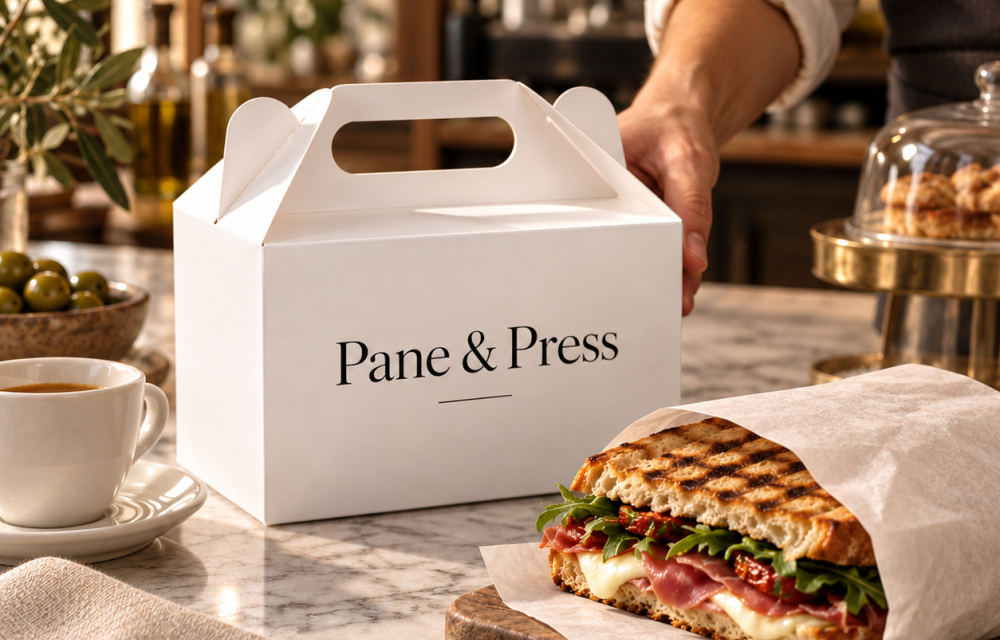
Mastering Steam And Condensation Control In Food Packaging
A dish leaves the kitchen looking exactly right.
Twenty minutes later, the clear lid is fogged, droplets are running down the inside, and something that started crisp is beginning to look considerably less enthusiastic.
That is condensation doing what condensation does.
For businesses selling fresh dishes through delivery, takeaway, meal prep, or direct-to-consumer channels, controlling steam is not just about keeping packaging looking neat. Excess moisture can affect texture, presentation, container performance, and the customer's first impression when they finally open the pack.
Good steam and condensation management for fresh meals starts with understanding where that moisture comes from and giving it somewhere sensible to go.
That could mean carefully positioned vents.
It could mean an absorbent component. It could mean changing how containers stack.
Most often, it means looking at the packaging as a complete system rather than blaming the lid.
Need food packaging to get you started?

Why Does Condensation Form Inside Food Packaging?
Hot food releases water vapour.
Once that warm, moist air reaches a cooler surface, such as the inside of a lid, some of the vapour turns back into liquid water.
That is condensation.
In a sealed container, the moisture has very few places to go. It can collect on the lid, run down the sidewalls, or fall back onto the food.
This becomes especially noticeable with:
- Freshly cooked meals.
- Fried or crisp products.
- Rice and grains.
- Pasta.
- Roasted vegetables.
- Hot bakery products.
- Meals containing several ingredients at different temperatures.
- Food packed before it has stopped releasing significant steam.
The first principle of condensation prevention in e-commerce food packaging is therefore simple:
Understand how much steam your product produces, then decide whether the pack needs to release, absorb, or otherwise manage that moisture.
Steam Control Is A Balancing Act
It would be lovely if the answer were simply “add more holes”.
It is not.
Food packaging often needs to balance several competing requirements:
- Releasing excess moisture.
- Retaining enough heat.
- Preventing spills.
- Protecting food in transit.
- Maintaining hygiene.
- Keeping the lid secure.
- Preserving texture.
- Allowing containers to stack.
- Presenting the meal well on arrival.
A heavily vented container may deal brilliantly with steam but perform poorly with a liquid-heavy dish.
A completely sealed pack might contain sauce perfectly but trap more moisture than a crisp product can tolerate.
The right design depends on the dish.
Packaging should follow the food, not the other way around.
How Do Vent Patterns Help?
Vents provide an intentional route for steam to leave a container.
Vented food-packaging lids are commercially available specifically to allow steam to escape and help reduce condensation build-up.
The details matter, though.
Consider:
- Where the vents are positioned.
- How many there are.
- Their size.
- Whether they remain open after stacking.
- Whether the food contains liquids that could reach them.
- How the pack may tilt during transit.
- Whether the product needs more or less moisture release.
This is why the right vent pattern cannot be selected from the food category alone.
“Fresh meal” covers everything from crispy chicken to curry.
Those are not the same packaging job.
More Venting Is Not Automatically Better
When steam is the enemy, adding as much ventilation as possible can sound logical.
But vents also affect heat retention and containment.
For foods where crispness matters, releasing more moisture may be useful.
For soups, stews, curries, and other liquid-heavy products, secure containment becomes a bigger priority.
A good fresh dish steam control solution therefore balances ventilation against the specific product's texture, temperature, and leak risk.
Before changing a vent pattern, ask:
What problem are we actually trying to solve?
Fogged lid?
Soggy food?
Pressure inside the pack?
Wet board?
Poor presentation?
Those problems may have related causes, but they do not always require identical solutions.
Clear Lids Make Condensation Very Visible
Transparent lids have an obvious advantage.
Customers can see the food.
So can the packing team.
That visibility can be useful for order checking, quality control, retail display, and presentation.
It also means condensation gets nowhere to hide.
A heavily fogged clear lid can make a colourful, carefully presented dish look less appealing before the customer has even opened it.
For premium meal delivery, this matters.
The customer ordered the food.
They are also judging the condition in which it arrived.
A clear lid that remains clearer for longer can help the meal look closer to the way it did at the packing station.
That does not mean completely condensation-free packaging is realistic for every hot dish.
The goal is sensible moisture management, not pretending steam does not exist.
Vent Position Matters When Containers Are Stacked
Here is where stack behaviour becomes important.
A vent can work perfectly when one container is sitting by itself.
Put another container directly on top and the story may change.
Top-facing ventilation openings can potentially become obstructed when containers are stacked, which is why some stackable packaging designs deliberately account for maintaining ventilation pathways between containers.
For an operations team, this matters enormously.
Meals are rarely transported one at a time on a perfectly empty shelf.
They are stacked:
- At the packing station.
- In hot-hold areas.
- Inside crates.
- In delivery bags.
- On vans.
- At fulfilment hubs.
So test the container in the configuration you actually use.
Not sitting proudly on its own like it is waiting for a product shoot.
Test The Whole Stack
When assessing condensation performance, try:
One container.
Then:
Two containers stacked.
Then:
The maximum stack normally used during fulfilment.
Look for differences in:
- Lid fogging.
- Water droplets.
- Food texture.
- Vent obstruction.
- Lid deformation.
- Container stability.
- Temperature.
- Moisture around the base.
- Whether the top and bottom packs behave differently.
You may discover that the pack works perfectly individually but differently once ten orders are waiting for dispatch.
That is exactly the sort of thing you want to learn before peak Friday evening.
What Do Absorbent Inserts Do?
Venting is not the only way to manage moisture.
Absorbent components can be designed to capture water, liquids, or condensation inside food packaging. Specialist absorbent sheets, for example, are used in food packaging applications to hold moisture generated by steam or other liquids.
Depending on the application, absorbent elements might help manage:
- Condensation.
- Food exudate.
- Small amounts of free liquid.
- Moisture collecting beneath a product.
But, like barriers and vents, absorbency needs to be specified for the actual food and packaging system.
An absorbent component should not simply be dropped into every fresh-meal pack because moisture exists.
Ask what it is absorbing, how much, where it sits, and whether it is suitable for its intended food-contact use.
Absorbent Inserts Do Not Replace Good Packaging Design
An insert can manage some moisture.
It cannot fix everything.
If a container is trapping large amounts of steam, an absorbent component may simply become overwhelmed.
If vents are obstructed, changing the insert may miss the real problem.
If the food is packed too hot for the intended packaging system, you may need to look at packing process as well as materials.
Think of absorbency as one tool.
The complete moisture-management toolkit could include:
- Ventilation.
- Suitable packaging material.
- Absorbent components.
- Pack geometry.
- Headspace.
- Temperature at packing.
- Holding time.
- Stacking method.
- Delivery process.
The clever bit is getting them to work together.
Headspace Can Affect What Happens To Steam
How full is the container?
It sounds obvious, but the amount of space between hot food and the lid changes the environment inside the pack.
If food sits immediately beneath a cooler lid, moisture released from the dish has very little room to disperse before reaching that surface.
A little more headspace may change how vapour circulates.
But too much empty space can be inefficient for storage, transport, and material use.
Again, there is no magic universal measurement.
Test the portion size customers actually receive in the container you actually intend to use.
One pack size does not automatically suit every dish just because the food technically fits.
Food Arrangement Matters Too
Moisture can come from more than the main component.
Imagine a meal containing:
- Hot roasted chicken.
- Crisp potatoes.
- Steamed vegetables.
- Sauce.
Put everything into one sealed environment and each part starts affecting the others.
A wet or high-moisture component can soften something that was originally crisp.
Compartment designs, separate sauce containers, liners, or different packing arrangements may help in some applications.
The point is not that every dish needs five compartments.
It is that food packaging design should consider how the different parts of the meal behave together.
The container is a very small climate.
Everything inside contributes to it.
Packing Temperature Deserves Attention
When do you close the lid?
Immediately?
Thirty seconds after plating?
Five minutes later?
That process decision can influence how much steam becomes trapped inside the packaging.
For high-volume fulfilment teams, changing hold time may have operational consequences, so this is not always as simple as leaving everything open for longer.
Food safety, required serving temperature, product quality, and your operating procedure all need to be considered.
Instead of guessing, include pack timing in your trial.
For example:
Trial A: lid applied immediately.
Trial B: lid applied after the approved short rest period.
Then compare the result under realistic conditions.
Small process differences can produce useful insight.
How To Test Condensation Properly
A condensation test should recreate the customer's journey.
1. Use The Real Dish
Test the actual recipe and portion size.
Substituting something easier or less steamy gives you prettier results and worse information.
2. Use The Real Pack
Include the production lid, inserts, compartments, labels, seals, and other components.
3. Pack At Normal Temperature
Follow your actual operating procedure.
4. Stack Normally
If orders leave the kitchen stacked four-high, test them four-high.
5. Recreate Transit Time
If delivery normally takes 30-45 minutes, inspect the food at those points.
6. Move The Pack
Put it in the delivery bag or crate.
Carry it.
Drive it around if appropriate.
Static shelf tests only tell part of the story.
7. Check Several Things
Record:
- Lid clarity.
- Droplet formation.
- Product texture.
- Water pooling.
- Container softness or distortion.
- Leakage.
- Vent performance.
- Appearance of labels.
- Stack stability.
8. Photograph The Results
Take photographs at consistent intervals.
That makes comparisons between packaging formats far easier.
Create A Simple Packaging Trial Scorecard
Operations teams do not need every packaging trial to become a thesis.
A straightforward scorecard can make comparisons much easier.
For example:
| Measure | Pack A | Pack B | Pack C |
|---|---|---|---|
| Lid clarity after 30 minutes | Good | Moderate | Poor |
| Visible droplets | Low | Medium | High |
| Food texture | Good | Good | Softened |
| Leak performance | Good | Good | Good |
| Stack stability | Good | Poor | Good |
| Packing speed | Fast | Moderate | Fast |
| Ease of closing | Good | Good | Moderate |
| Material information verified | Yes | Yes | Pending |
That turns “I think Pack A was nicer” into something your procurement and operations teams can actually use.
Do Not Sacrifice Fulfilment Speed
The perfect container is not perfect if it takes twice as long to pack.
For high-volume e-commerce operations, evaluate:
- How quickly lids close.
- Whether packs nest easily.
- Whether containers separate cleanly.
- How much storage space they use.
- Whether staff can identify sizes quickly.
- Whether vented and unvented versions are easy to distinguish.
- Whether inserts add an extra packing step.
- How reliably stacks remain stable.
- Case quantities.
- Supplier lead times.
- Reordering reliability.
A packaging change that improves presentation but creates a bottleneck at peak volume may simply move the problem somewhere else.
The best option needs to work for the customer and the packing line.
Supplier Consistency Matters
If your moisture-management strategy relies on a particular vent design or absorbent component, consistency matters.
Replacing a pack with a visually similar alternative may change its behaviour.
That is why operations teams should know more than just the container dimensions.
When briefing packaging suppliers, record relevant specifications such as:
- Material.
- Dimensions.
- Lid type.
- Vent arrangement.
- Food-contact documentation.
- Temperature suitability where applicable.
- Absorbent component specification.
- Case quantity.
- Supplier SKU.
- Approved substitute rules.
This becomes even more important across multiple sites.
“Use the clear rectangular one” is not much of a packaging specification.
Food-Contact Suitability Still Comes First
Steam control does not replace food-safety considerations.
UK government guidance states that businesses packaging food themselves must use packaging suitable for food use. Certain food-contact materials may also require supporting compliance documentation.
That applies to the complete packaging system where relevant, including components that come into contact with food.
When introducing vents, inserts, liners, lids, or other new parts, check that the product is specified for the intended use.
The right question is not simply:
“Is this food-safe?”
A more useful question is:
“Is this suitable for contact with this food, at this temperature, for this length of time, in the way we intend to use it?”
Clear Lids Can Help Operations As Well As Presentation
A transparent lid can do more than make the food look appealing.
It can allow staff to visually check:
- The correct dish.
- Portion presentation.
- Missing components.
- Garnishes.
- Sauce pots.
- Product movement.
- Obvious packing errors.
For high-volume operations, that quick visual check can be useful before an order leaves the packing station.
But visibility only works if the lid remains reasonably clear.
Heavy condensation can turn a transparent lid into a translucent guessing game.
That is another reason steam management belongs in the operational brief, not simply the design brief.
Can Better Condensation Control Reduce Returns?
Potentially, where packaging-related moisture is contributing to complaints.
If customers are reporting soggy food, damaged presentation, leaking condensation, or food arriving very differently from how it left the kitchen, packaging may be one part of the issue.
Do not assume every complaint is caused by the container.
Track the problem.
Look at:
- Which dishes generate complaints.
- Delivery duration.
- Pack format.
- Time of day.
- Whether issues cluster around particular sites.
- Packing temperature.
- Stack configuration.
- Weather or ambient temperature where relevant.
Then trial one controlled change at a time.
Otherwise, you may switch three packaging components and have no idea which one solved the problem.
Or which one created the next one.
Sustainability Claims Need The Same Discipline
Packaging designed to control moisture may include several components.
A tray.
A clear lid.
An absorbent insert.
A liner.
Perhaps a separate sauce pot.
That makes sustainability assessment more complicated than looking at the material named on the base of the pack.
Ask:
- What is each component made from?
- Is recycled content present, and at what percentage?
- Are responsibly sourced fibre options available?
- Can components be separated?
- What recycling route is expected locally?
- Is every component necessary?
- Does better protection help prevent food damage or waste?
- Can one component perform two functions?
- Are sustainability claims supported by documentation?
Avoid broad phrases such as “100% sustainable”.
Specific material information is more useful and much easier to trust.
Do Not Pick Packaging By Material Alone
It can be tempting to turn the decision into:
Paper versus plastic.
Fibre versus clear plastic.
Reusable versus disposable.
But steam does not care which side of a packaging debate you prefer.
It responds to temperature, moisture, airflow, surface conditions, and geometry.
Different packaging constructions can behave differently depending on the dish and journey.
Instead of asking which material is universally best, compare complete packs against your requirements.
That gives you a much more useful answer.
Think About The Delivery Bag Too
The food container is not travelling alone.
It may sit inside:
- An insulated bag.
- A crate.
- A cardboard delivery box.
- A multi-order tote.
- A refrigerated vehicle.
- A heated holding environment.
Those surroundings affect temperature and moisture behaviour.
A vent that releases steam successfully inside an open room may behave differently inside a tightly packed insulated bag containing several hot dishes.
So include secondary packaging in your test.
Your customer receives the whole journey.
Your trial should replicate it.

High-Volume Operations Need Repeatable Packaging
A pack that works brilliantly when assembled by the person who chose it may be less brilliant when 20 new starters need to use it during peak season.
Look for repeatability.
Can staff:
- Close it correctly every time?
- Identify the right lid?
- Stack it without covering critical features?
- Use inserts consistently?
- Assemble it quickly?
- Spot damaged packaging?
- Understand which dishes use which format?
Packaging should reduce operational ambiguity, not add to it.
Sometimes a slightly simpler system that works consistently across multiple sites beats a highly specialised solution that is easy to misuse.
A Steam And Condensation Control Checklist
Before approving packaging for fresh dishes, check:
- How much steam does the dish generate?
- Is texture affected by trapped moisture?
- Does the product need ventilation?
- Where are the vents positioned?
- Could stacking obstruct them?
- Is the dish liquid-heavy enough to create spill concerns?
- Would an absorbent component help?
- Is the absorbent component suitable for the intended use?
- How much headspace does the pack provide?
- Is the lid clear?
- How does lid visibility change during realistic transit?
- At what temperature is the food packed?
- How long is it held before dispatch?
- How long is the typical delivery journey?
- Is the pack stacked during holding or delivery?
- Has the complete pack been tested inside the actual delivery bag?
- Is the packaging suitable for its intended food-contact use?
- Does the format slow down fulfilment?
- Can the supplier consistently provide the same specification?
- Are environmental claims specific and supported?
If your trial only involves looking at an empty container, it is not really a food-packaging trial.
Put the food in.
Venting, Absorbency, Or Both?
| Packaging Issue | Option To Explore | What To Check |
|---|---|---|
| Heavy lid fogging | Ventilation | Vent position, airflow, stack obstruction |
| Water droplets returning to food | Ventilation or moisture management | Dish temperature, venting, absorbency |
| Crisp food softening | Controlled ventilation | Heat retention versus moisture release |
| Free liquid beneath product | Suitable absorbent component | Capacity, placement, food-contact suitability |
| Pack performs alone but poorly stacked | Stack-aware vent design | Whether upper packs obstruct vents |
| Lid becomes difficult to see through | Steam-management changes | Venting, food temperature, transit conditions |
| Too many components slow packing | Simplified packaging system | Fulfilment speed and repeatability |
The aim is not to add every feature.
It is to solve the actual problem with the fewest sensible components.
Clearer Lids Start With A Better Test
Steam is not a packaging fault.
Ignoring it can be.
Fresh food continues changing after the lid goes on. Heat moves. Moisture moves. Containers get stacked. Orders sit in bags. Vans move. Customers live twenty minutes away rather than beside the pass.
Your packaging needs to work through all of that.
Use venting where the dish needs it.
Use absorbency where it genuinely helps.
Pay attention to how stacks affect airflow.
Then test the finished pack exactly as your operations team will use it.
Because control of steam and condensation for fresh dishes is not really about creating a perfect empty container.
It is about making sure the food still looks worth opening at the other end.
Choosing packaging for fresh meals or high-volume food delivery? Explore Tiny Box Company food packaging materials and test your shortlisted formats with the dishes you actually send.
For the next part of the food-packaging specification, explore Window Materials That Meet Food Contact Needs.
FAQs
How Does Steam Affect Fresh Food During Transit?
Hot food releases water vapour, which can condense on cooler packaging surfaces. That moisture may collect on lids or return to the food, potentially affecting texture and presentation.
How Can Condensation Be Reduced In Food Packaging?
Depending on the dish, useful approaches may include controlled ventilation, suitable absorbent components, appropriate headspace, considered packing temperature, and packaging designed around realistic transit conditions. The best solution should be confirmed through trials using the actual food.
Do Vented Lids Help Reduce Condensation?
They can. Vented lids provide a route for steam to escape, which can reduce moisture accumulation inside suitable food packaging applications.
Does More Ventilation Always Mean Better Food?
No. Too much ventilation can affect heat retention or containment, while liquid-heavy foods have different requirements from crisp dishes. Venting needs to suit the product and journey.
What Do Absorbent Inserts Do In Food Packaging?
Suitable absorbent packaging materials can capture moisture or liquid within a pack. Some specialist products are specifically designed to absorb condensation or moisture generated by freshly cooked food.
Can Stacking Affect Steam Control?
Yes. If a vent is positioned where another container covers it, stacking can reduce the effectiveness of that ventilation pathway. Some stackable container designs specifically address this issue.
Why Are Clear Lids Useful For Fresh Food?
Clear lids let customers see the food and can help packing teams visually check dishes before dispatch. However, condensation may reduce that visibility, making steam management particularly relevant for clear-lid packaging.
Can Condensation Control Reduce Customer Complaints?
If poor moisture management is causing food to arrive soggy, wet, or badly presented, improving the packaging may help. Track complaint data and test packaging changes rather than assuming condensation is the only cause.
What Should High-Volume Operations Look For In Food Packaging?
Look beyond presentation. Consider packing speed, nesting, lid compatibility, stack stability, storage space, case quantities, supply consistency, food-contact suitability, and how well the pack performs during actual delivery.
Is Paper Packaging Better For Condensation?
Not universally. Performance depends on the complete material construction, barriers, food, temperature, ventilation, and pack design. Compare finished packaging systems rather than assuming one base material will always perform better.
Does Food Packaging Need To Be Food-Contact Suitable?
Yes. If you package food yourself, UK guidance requires suitable food-use packaging. Check the specification and supporting documentation for the particular packaging and intended application.
How Should I Test New Food Packaging?
Use the real dish, realistic packing temperature, normal portion size, full packaging components, normal stacking, and realistic delivery time. Check condensation, lid clarity, texture, leakage, stack performance, and packing efficiency before approving the format.