







 Consultations
 Box Finder
 Help Centre


Strategic Window Placement In Gift Boxes To Minimise Glare
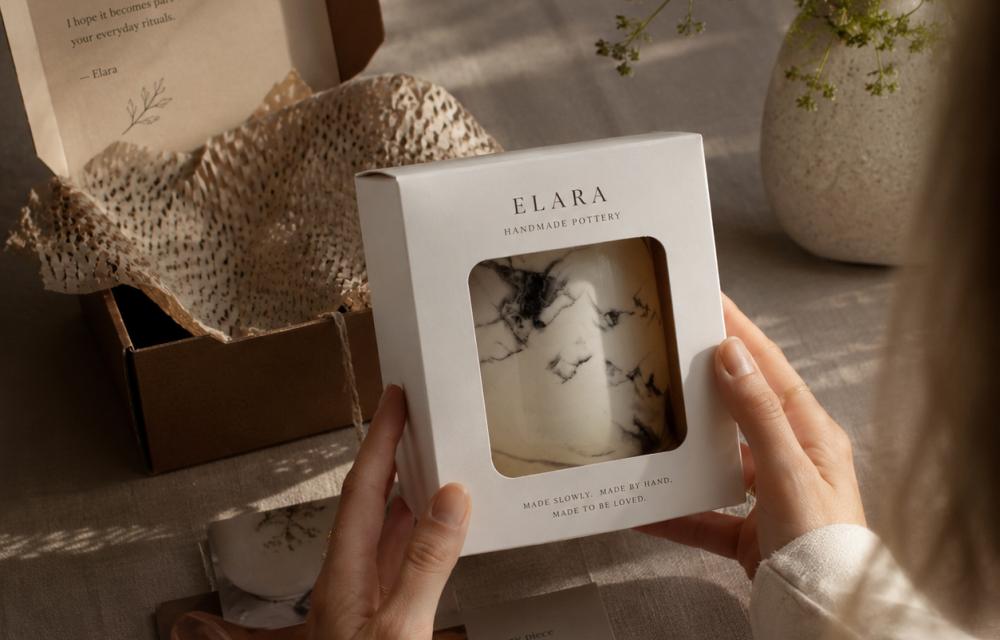
Glare-free product window placement can make the difference between “oh, that looks lovely” and “what am I looking at?” For small e-commerce brands, gift box packaging needs to show the product clearly, protect it neatly, and make the customer feel confident before the lid is even lifted. A well-placed window does exactly that, no awkward reflections invited.
For UK startups and small-scale e-commerce founders, window display techniques for e-commerce need to be practical as well as pretty. You may be selling through your own website, Etsy, markets, wholesale stockists, and seasonal campaigns, so the same box has to work hard across many settings. The window needs to showcase the product, reduce glare, suit your branding and design, and still be quick to pack.
This guide explains how to choose the right window position, PET material, anti-scuff film, size, shape, and cut line so your product can shine without bouncing light straight back at your customer.
Explore presentation boxes that help your products look clear, polished, and ready to gift.
What Is Glare-Free Product Window Placement?
Glare-free product window placement means positioning the clear window in gift box packaging so the product is visible without harsh reflections, awkward shine, or distracting light spots.
It is not just about adding a transparent panel. It is about deciding where the customer’s eye should go, how light will hit the surface, and how the product will look on shelf, online, in photos, and during unboxing.
A strong window arrangement that highlights product without glare usually considers:
- Product shape and focal point.
- Window size and position.
- PET clarity and finish.
- Anti-scuff films for packaging.
- Cut line accuracy.
- Lighting in retail, photography, and home settings.
- How the window works with branding and design.
In plain English, the window should show the product, not show off every ceiling light in the room.
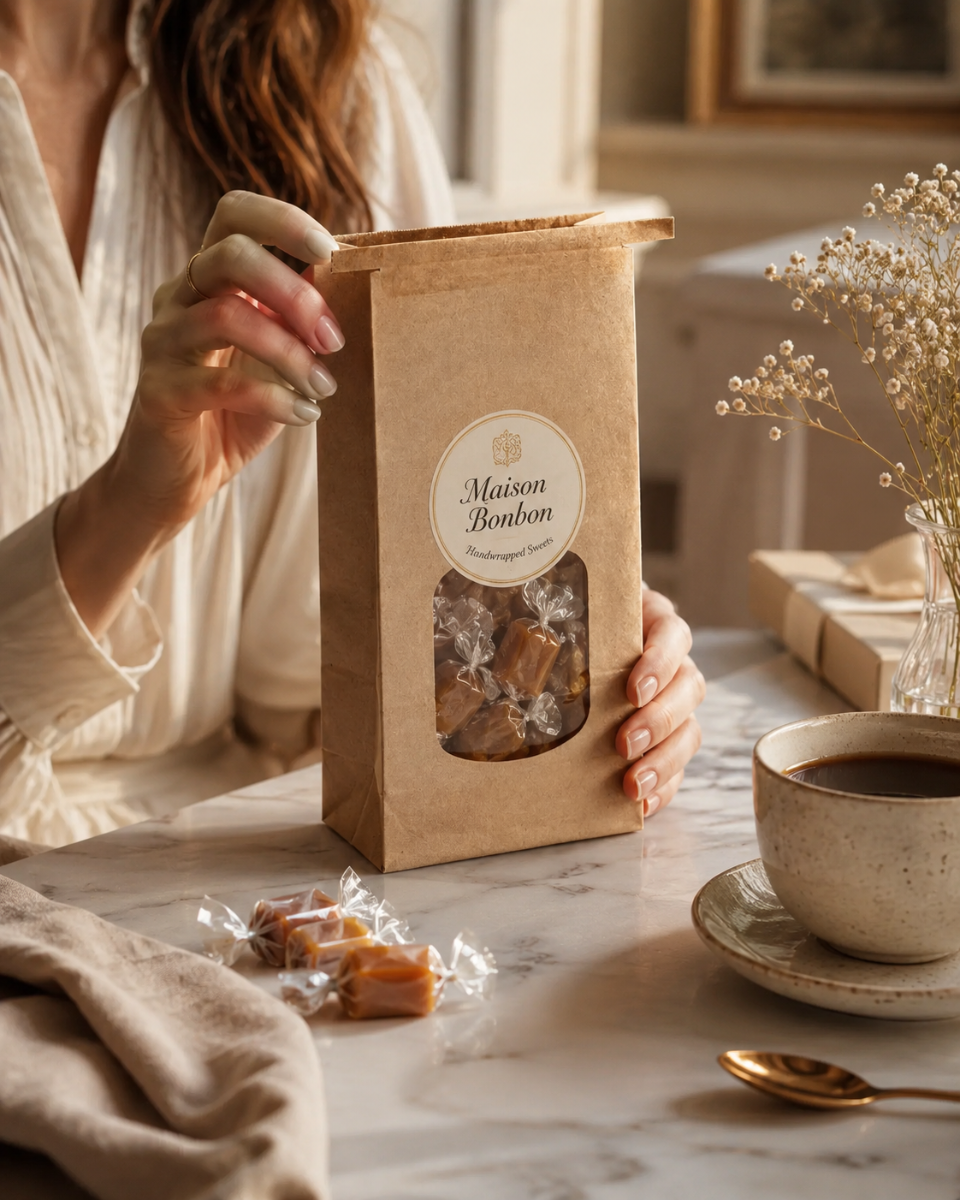
Why Window Placement Matters For E-Commerce Brands
A window gives customers a preview. It helps them see colour, texture, scale, finish, or detail before opening the box. That can be powerful for products where appearance sells the story, such as candles, confectionery, jewellery, stationery, skincare, soaps, ceramics, wax melts, bath products, and a personalised pamper box.
Good window positioning can help:
- Increase customer engagement.
- Improve perceived product quality.
- Reduce uncertainty before purchase.
- Make gift boxes feel more premium.
- Support photography for product pages.
- Create a stronger shelf or market stall display.
- Improve unboxing experience enhancement.
- Keep branding visible while showing the product.
For small businesses, packaging is doing the job of a salesperson when you are not in the room. A clear, glare-conscious window helps the box say: “Yes, it looks this good inside too.”
PET Choices For Product Visibility
PET is commonly used for clear packaging windows because it offers good product visibility, structure, and clarity. For gift boxes, PET choices for product visibility matter because the window is part of the customer’s first impression.
When reviewing PET options, think about:
- Clarity: The window should show the product accurately, without cloudiness or distortion.
- Thickness: The film should be sturdy enough to sit flat and resist denting, but not so heavy that it overcomplicates the box.
- Surface finish: High-gloss films can look crisp, but they may reflect more light. A more controlled finish may reduce visual distraction, depending on the product and setting.
- Scuff resistance: If the box will be handled often, packed in batches, shipped, or displayed at markets, the window needs to stay clean and presentable.
- Recyclability considerations: Mixed materials can affect disposal routes, so use clear, accurate recycling guidance where appropriate.
The best PET choice is not always the shiniest one. It is the one that keeps the product visible, the box polished, and the customer focused on what you are selling.
| PET Consideration | Why It Matters | What To Check |
|---|---|---|
| Clarity | Helps customers see colour, texture, finish, and product detail clearly. | Check for cloudiness, distortion, and how accurately the product appears. |
| Thickness | Supports a flat, neat window that resists denting and warping. | Make sure the film suits the box structure and does not overcomplicate packing. |
| Surface finish | Can affect glare, shine, and overall product visibility. | Test under natural light, artificial light, and product photography lighting. |
| Scuff resistance | Helps the window stay clean and premium during handling and display. | Review whether anti-scuff film is needed for storage, markets, or wholesale handling. |
Anti-Scuff Films For Packaging
Anti-scuff films for packaging help protect clear windows from scratches, rub marks, and dull patches during packing, storage, transport, and display. This matters because even a beautifully placed window can look tired if the surface becomes marked before the customer sees it.
Anti-scuff films can support:
- Cleaner product visibility.
- Better retail presentation.
- Stronger photography results.
- Fewer rejected or discounted units.
- A more premium customer experience.
- More consistent appearance across batches.
This is especially helpful for gift packaging wholesale, seasonal gift boxes, and products that will be handled repeatedly at markets or in stock rooms.
A scratched window does not whisper “handmade charm”. It usually says “this has had a journey”. Let’s avoid that.
How Window Angle Affects Product Visibility
Window positioning that displays product without reflections depends on how light hits the window and how the customer views it. A flat, central window can work well for many products, but it may reflect overhead lights if the box is displayed upright or photographed from the front.
Think about the most common viewing situations:
- On a market stall.
- On a shop shelf.
- In product photography.
- In customer unboxing videos.
- In direct mail or gift delivery.
- In flat-lay shots for social media.
- In a retail display under bright lights.
If the product is usually viewed from above, a top window may be best. If it is displayed upright, a front-facing window may be stronger. If glare is likely from overhead lighting, a slightly lower, shaped, or offset window may show the product more clearly.
The goal is to create a window arrangement that highlights product without glare in the settings your customers actually see.
Choosing The Right Window Size
A bigger window does not automatically mean a better display. Too much clear surface can increase glare, reduce structural strength, and leave less room for branding. Too small, and the customer may not see enough of the product to feel excited.
Choose window size based on:
- The product’s hero detail: Show the part that sells the product: texture, colour, label, finish, flavour, pattern, or shape.
- The box structure: The window should not weaken corners, folds, tabs, or glue areas.
- Branding space: Leave enough room for logo, product name, ingredients, care details, or gift messaging.
- Photography needs: The window should make online images easier, not create a reflection festival.
- Shelf visibility: Make sure the product can be understood quickly at a glance.
- For many small e-commerce brands, the best window is generous enough to reassure, but restrained enough to keep the box looking premium.
Choosing The Right Window Shape
Window shape should support both product visibility and brand style. A rectangular window may feel clean and practical. A circular window can feel softer or more playful. A die-cut shape can help reinforce brand identity, but it needs to be designed carefully so it does not distract from the product.
Common options include:
- Rectangular windows: Good for candles, soaps, skincare, stationery, and products with labels.
- Square windows: Good for balanced gift boxes, confectionery, jewellery, and compact items.
- Round or oval windows: Good for softer brand styles, bath products, wax melts, and decorative goods.
- Custom die-cut windows: Useful for brand storytelling, seasonal campaigns, or product shapes, but they need precise cut lines and careful testing.
- A window should frame the product like a tiny stage, not compete with it for applause.
Precise Cut Lines: The Detail That Makes It Work
Precise cut lines are essential for clean window placement. If the cut is uneven, too close to a fold, or badly aligned with the product, the box can look less premium and the window may not sit smoothly.
Good cut lines help:
- Keep the window neat.
- Reduce gaps or puckering.
- Support clean edges.
- Protect structural strength.
- Align the product with the viewing area.
- Avoid glue area clashes.
- Improve repeatability across batches.
For your next packaging design step, read Artwork That Avoids Glue Area Clashes.
When you create a gift box with a window, the artwork, cut line, glue area, and product placement all need to work together. The magic is in the millimetres.
Strategic Window Placement For E-Commerce
Strategic window placement for e-commerce starts with one question: what does the customer need to see to feel confident buying?
For some products, it is colour, for others, it is texture. For others, it is scale, finish, label, scent name, flavour, or handmade detail.
Use this process:
1. Identify The Product’s Selling Point.
Decide what part of the product should be visible first. Do not try to show everything if one detail matters most.
2. Choose The Viewing Angle.
Think about whether customers will see the box flat, upright, on a shelf, online, or in a gift bundle.
3. Check The Lighting.
Consider overhead lighting, natural light, photography lights, and market stall conditions. Reflective windows behave differently in each.
4. Protect The Branding.
Make sure the window does not crowd the logo, product name, or key information.
5. Test With The Actual Product.
Mock up the window with the product inside. A window that looks perfect on a dieline may reveal the wrong part of the product once packed.
6. Photograph It.
Take phone photos in natural light, artificial light, and your usual product photography setup. If glare appears, adjust before production.
7. Check Assembly Speed.
The window design should not slow down packing or make products difficult to position consistently.
Best Lighting For Retail Product Displays
Lighting plays a major role in how windows perform. Even the best window placement can struggle under harsh lighting if the box is angled poorly.
For the best lighting for retail product displays:
- Avoid placing windowed boxes directly under harsh overhead light where possible.
- Use softer side lighting for product photography.
- Angle the box slightly rather than shooting straight into the window.
- Avoid highly reflective backgrounds near the box.
- Keep the window clean before photography.
- Test natural light and artificial light.
- Watch for reflections from phones, cameras, white walls, or nearby displays.
This is especially useful if you sell across online marketplaces and social channels. A glare-free product photo helps customers see what they are buying, which can support confidence and conversion.
Tiny Box Company packaging can do a lot, but even the prettiest window deserves decent lighting.
Window Display Techniques For E-Commerce
Window display techniques for e-commerce need to work across product pages, social posts, customer photos, and physical displays.
Try these practical techniques:
- Use contrast inside the box: A darker or lighter insert can help the product stand out behind the window.
- Keep the product close to the window: If the product sits too far back, reflections may dominate and the item can look less clear.
- Avoid clutter: Do not let tissue, shredded paper, or inserts block the window.
- Use the window as a frame: Position the product so the visible area feels intentional.
- Keep labels facing forward: If the product has a label, align it with the window every time.
- Consider social media crops: Make sure the window still works in square, portrait, and thumbnail images.
- Use consistent packing guides: If one team member packs the product differently, the window display may change from box to box.
Good window packaging should make product photography easier, not turn every shoot into a lighting negotiation.
| Technique | What It Helps With | Best Used For |
|---|---|---|
| Use contrast inside the box | Helps the product stand out clearly behind the window. | Candles, soaps, jewellery, stationery, and small gifts. |
| Keep the product close to the window | Reduces visual distance and helps reflections feel less dominant. | Products with labels, textures, colours, or decorative details. |
| Keep labels facing forward | Makes product information and branding visible at first glance. | Candles, skincare, food gifts, bath products, and jars. |
| Use consistent packing guides | Helps every product sit in the right place behind the window. | Batch packing, wholesale orders, market stock, and seasonal campaigns. |
How Window Placement Enhances The Unboxing Experience
A window changes the rhythm of unboxing. It gives a preview before the reveal, building anticipation and helping the customer connect with the product earlier.
Effective window placement can enhance unboxing by:
- Showing the product before opening.
- Reassuring the customer that the item is correct.
- Highlighting colour, detail, or finish.
- Making gift boxes feel more thoughtful.
- Supporting premium presentation.
- Encouraging social sharing.
- Making products easier to browse in gift sets.
For a personalised pamper box, for example, a window might show the candle label, soap colour, or bath product texture. The customer gets a little peek, then the full reveal. Very civilised. Very giftable.
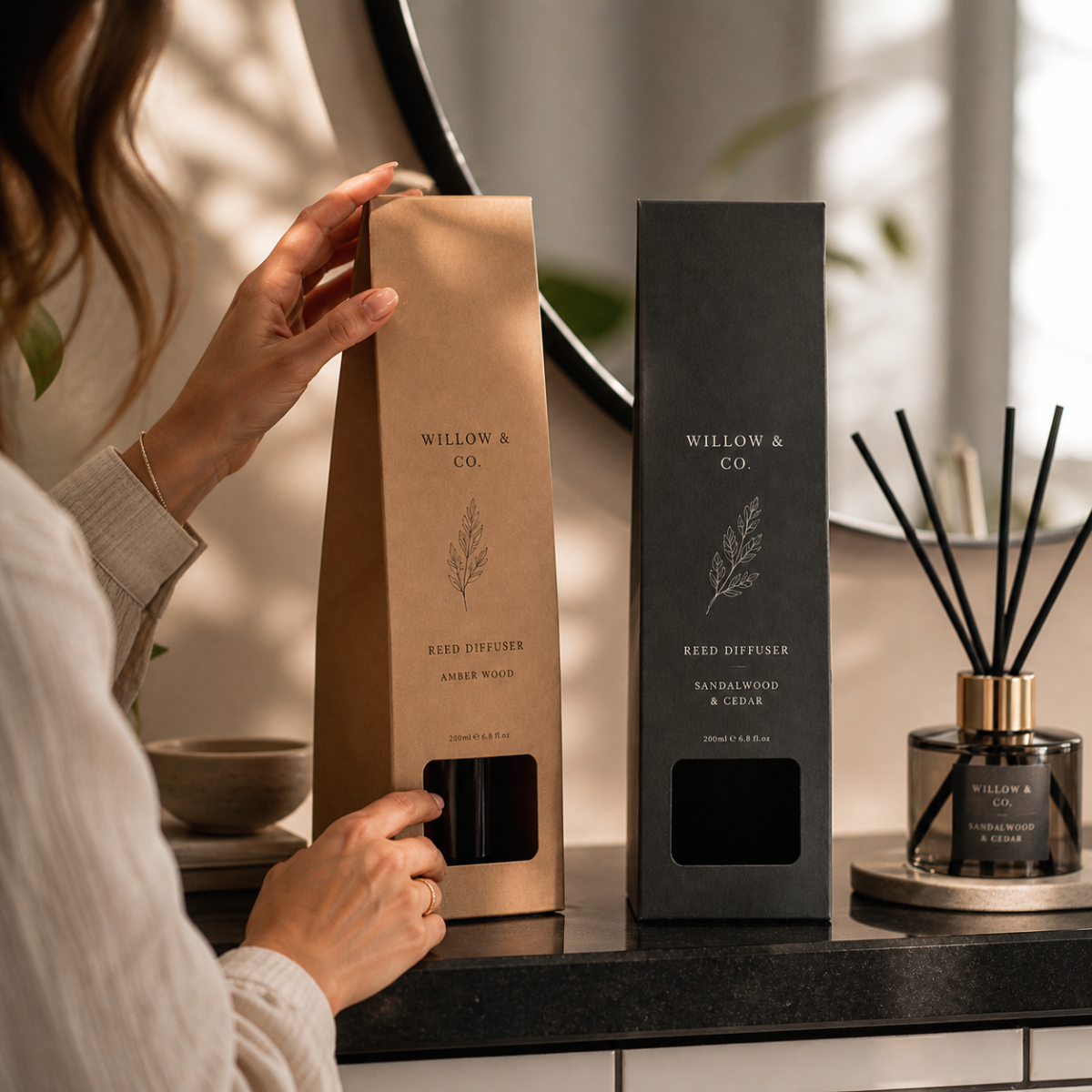
Branding And Design Considerations
Window placement should feel like part of the brand system. It should work with your colours, logo, typography, finishes, and product photography style.
Consider:
- Where the logo sits.
- Whether the window interrupts key copy.
- How much board space is left for branding.
- Whether the window shape matches your brand style.
- Whether the product looks premium through the film.
- Whether the window affects stacking or display.
- Whether it works across seasonal designs.
- Whether the same structure can support future products.
For lean e-commerce teams, versatility matters. A windowed box that can work across multiple products or seasonal wraps can help reduce storage pressure and keep packaging more manageable.
Common Products That Work Well With Window Gift Boxes
Window gift boxes are especially useful when the visual appeal of the product helps sell it.
They can work well for:
- Candles.
- Soaps.
- Wax melts.
- Jewellery.
- Chocolates.
- Biscuits.
- Skincare.
- Bath salts.
- Stationery.
- Hair accessories.
- Small ceramics.
- Tea or coffee gift sets.
- A personalised pamper box.
- Seasonal gifts and hampers.
The key is to match the window to the product’s best angle. A candle label, a chocolate arrangement, or a handmade soap texture all need different framing.
Sustainable Considerations For Windowed Packaging
Windowed packaging can still be considered carefully, but sustainability claims need precision. A box with a PET window may include mixed materials, so disposal instructions should be clear.
When reviewing options, ask:
- Is the board recyclable?
- Is the PET window removable?
- Does the film affect recycling?
- Is recycled content used in the board?
- Are FSC-certified options available?
- Can the customer understand how to dispose of each component?
- Is the box right-sized to avoid excess material?
- Can the same box be used across multiple product lines?
Use specific language, such as recyclable board, removable PET window, recycled content with a known percentage, or FSC-certified options where applicable. Avoid broad claims like “100% sustainable” unless formally proven.
Eco-minded packaging works best when it is clear, honest, and useful. No green glitter clouds required.
Cost And Storage For Small Businesses
Startup founders and small e-commerce teams often need packaging that looks professional without taking over the stockroom. Window gift boxes can be a smart choice when they help products sell, reduce the need for extra display packaging, or support multiple channels.
To manage cost and storage:
- Choose versatile sizes.
- Use one box style across related products.
- Keep window shapes simple for repeat use.
- Avoid overcomplicated seasonal-only structures.
- Test before buying in larger quantities.
- Consider gift packaging wholesale when volumes are steady.
- Store windowed boxes carefully to avoid scuffing.
- Use anti-scuff films where handling risk is higher.
A box that looks gorgeous but only fits one limited-run product may not be the best first choice for a lean brand. Start with packaging that can grow with you.
Common Mistakes To Avoid
Making The Window Too Large
Large windows can increase glare and reduce space for branding. Show enough, not everything.
Forgetting The Product Position
If the product shifts inside the box, the window may show the wrong detail. Use inserts or internal supports where needed.
Placing Windows Too Close To Folds Or Glue Areas
This can affect structure, assembly, and finish. Keep cut lines and glue areas working together.
Ignoring Photography
If the box will be sold online, photograph a sample before committing. Glare that appears in product images can reduce visibility.
Choosing Film That Scuffs Easily
A clear window needs to stay clear. Anti-scuff options can help protect presentation during handling and storage.
Overcomplicating The Shape
Custom shapes can be beautiful, but they should still support visibility, strength, and cost-effective production.
Glare-Free Window Placement Checklist
Before approving your windowed gift box, check:
- Does the window show the product’s strongest selling point?
- Is the window positioned for how the box will be displayed?
- Does the PET film offer clear visibility?
- Is anti-scuff film needed for handling or storage?
- Are cut lines clean and away from glue areas?
- Is there enough space for branding and key copy?
- Does the product stay aligned behind the window?
- Does the window avoid harsh reflections in common lighting?
- Has the box been tested in product photography?
- Does it work for online, retail, and gifting channels?
- Are disposal instructions clear if materials are mixed?
- Can the packaging be packed quickly and consistently?
If the customer can see the product clearly, understand the brand instantly, and enjoy the reveal, your window is doing its job beautifully.
Ready To Show The Product, Not The Glare?
Ready to give customers a clearer look before the unboxing even begins? Explore presentation boxes and create gift box packaging that frames your product beautifully, supports your brand, and keeps every detail camera-ready.
FAQs
What Are The Best Materials For Window Placement In Gift Boxes To Minimise Glare?
PET is a common choice for clear windows because it offers strong visibility and a polished finish. To minimise glare, consider the PET finish, window size, placement, lighting conditions, and whether anti-scuff or specialist films are needed for your product and display environment.
How Can The Angle Of Window Placement Affect Product Visibility?
The angle and position of the window affect how light reflects from the surface. A window facing strong overhead or direct light may create glare, while an adjusted placement, offset shape, or different display angle can make the product easier to see.
What Techniques Can Be Used To Reduce Reflections When Photographing Products Through Windows?
Use softer lighting, angle the box slightly, avoid shooting straight into reflective film, and keep bright objects away from the window surface. Testing the box in natural and artificial light helps identify glare before product images go live.
What Are The Benefits Of Using PET Materials For Windows In Gift Boxes?
PET can offer clear product visibility, a neat finish, and enough structure for gift box windows. It helps customers see the product while keeping it protected inside the packaging.
How Can Anti-Scuff Films Improve The Presentation Of Products In Gift Boxes?
Anti-scuff films help reduce scratches, rub marks, and dull patches on the window surface. This keeps the product view clearer and helps the packaging look more premium after handling, storage, and display.
What Are The Best Practices For Designing Precise Cut Lines For Windows In Packaging?
Keep cut lines clean, consistent, and away from folds, corners, and glue areas. Test the window with the actual product inside the box to make sure alignment, visibility, and structure all work together.
How Does Effective Window Placement Enhance The Unboxing Experience For Customers?
Effective window placement gives customers a preview of the product before opening. It builds anticipation, reassures them about what is inside, and makes the final reveal feel more polished and intentional.
What Factors Should Be Considered When Choosing Window Size And Shape For Gift Boxes?
Consider the product’s hero detail, box strength, branding space, display angle, photography needs, and how the customer will open the pack. The best window size and shape should frame the product without overwhelming the box design.
How Can Strategic Window Placement Influence Customer Perception Of Product Quality?
A clear, well-positioned window makes the product look more considered and premium. It can help customers judge colour, texture, finish, and detail before purchase, which can improve confidence in the product.
What Role Does Lighting Play In Showcasing Products Through Windows In Packaging?
Lighting affects how much glare appears on the window surface. Soft, angled lighting usually helps products look clearer, while harsh direct light can create reflections that hide the item.